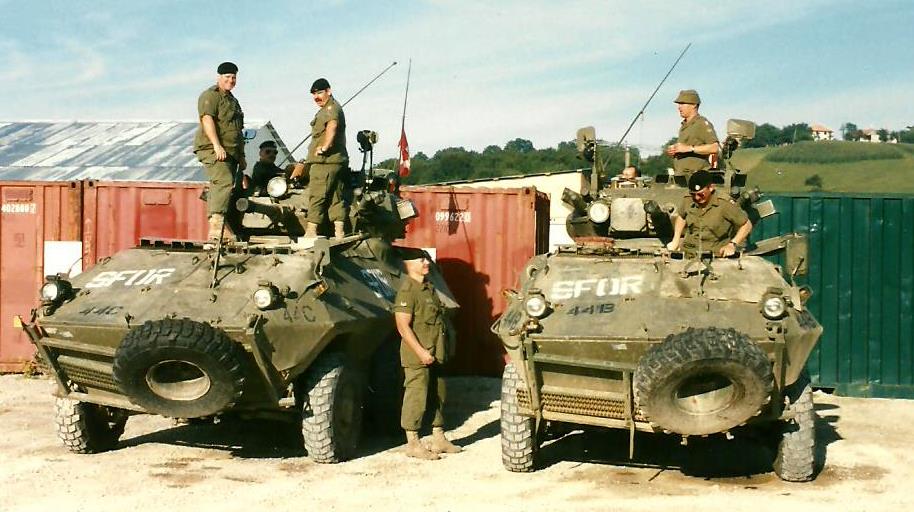
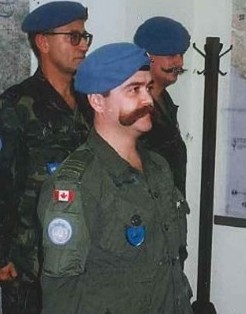
UNPROFOR, United Nations Military Observers (UNMO), in Croatia, Bosnia, Serbia and Macedonia, July 1992 to July 1993. Wayne Nightingale
WARNING: Due to the nature of the conflict and operations in the Balkans, some of these veterans' stories may contain graphic or disturbing content. Please use your discretion. If a story adversely affects your mental health, consider seeking help by consulting the agencies listed in the Resources section of this website.
My name is Wayne Nightingale, Major (Retired), CD. I served as a United Nations Military Observer (UNMO) in the UNPROFOR mission from July 1992 to July 1993.
David MacDonald has already presented a very good overview of UNMO roles and responsibilities with his story "UNPROFOR, UN Military Observers (UNMO), in Croatia, Bosnia, Serbia and Macedonia". I will not repeat his work here but I will provide some context around my experiences and memories in the mission prompted by my diary notes, photos and videos – most of which had been stored in a box for the past 30+ years.
I have included hyper-links to Google Maps for most of the locations. The photos and screen shots are included to provide some visual context. The screen shots are from video I had taken with my Sony Handycam Video8 and had digitized recently. Therefore, the quality is not great– especially interior shots. I will try to make the actual videos available online but you may want to take a Gravol before watching the mobile clips as the roads were quite rough and the camera had no stabilizing features.
Sarajevo (1st tour): Papa Team
UNMOs served for a 12-month period, and the practice in UNPROFOR was to relocate staff every 3 months or so to a new sector. After a few days of training in Zagreb in late July 1992 my first field deployment was Sector Sarajevo where I carried out general observer and later logistics duties with the Papa Team inside the besieged city.
The Papa Team manned 5 OPs (Papa 1 to Papa 5) with a 6th added near the end of 1992. Papa HQ was located in the Railway Directorate Building next to the Presidency building. Lima Team observers were deployed in Bosnian Serb held areas surrounding the city with Lima HQ located in Lukavica. Sector Sarajevo UNMO HQ was located within the city in the PTT (Post, Telegraph, Telephone) building with UNPROFOR Sector HQ.
There were usually three or four UNMO observers in each OP for a five-day shift with each UNMO arriving on station on different days for overlap and continuity. They came from all over the world and it was a unique opportunity to interact with and to learn from them.
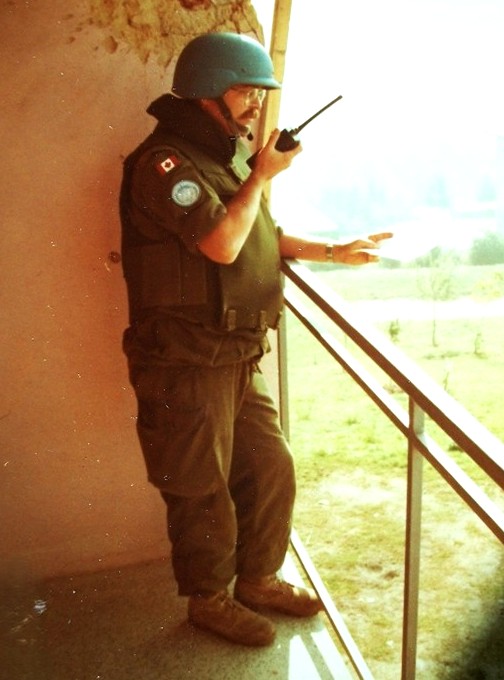
Figure 1 - Reporting from Papa 5 overlooking Sarajevo airport Aug 92. It soon became necessary to harden the OP with sandbags due to heavy shelling in the area.
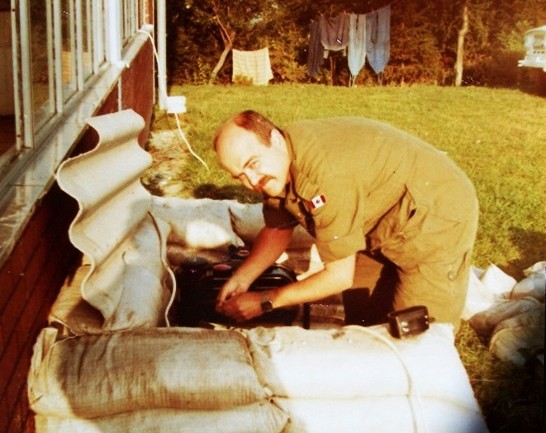
Figure 2 - Fixing the generator (again) at Papa 5 – Aug 92.
An important component of the teams were the interpreters. They provided essential translation services and cultural/historic context while enduring the same conditions and risks as the UNMOs (if not more so). Most were university students in their early 20s caught up in a conflict whose roots were ancient history to them. They did not consider themselves to be Serb, Croat or Muslim – they were cosmopolitan Sarajevans. Many had the opportunity to leave Sarajevo but chose to stay to defend it one way or another. Learning the value of good interpreters and other local assets was an experience that I put to good use in my second career in the humanitarian sector in Africa and Asia.
The first month as an UNMO in Sarajevo was a very steep learning curve. As others have pointed out, this was quite different from other UN missions. There were five separate ceasefire agreements in 1992 alone – each of which were broken by the warring parties with a total of 30 failed ceasefire agreements before the Dayton Agreement finally came into effect in 1995.
Sarajevo was constantly being shelled and its defences probed, with UNMOs reporting hundreds if not thousands of impacts on an almost daily basis in the city. Some of those impacts fell on or within 100 meters of our Papa locations. The SITREPs we would send to report shelling included a line where we would indicate the certainty of the location of impact and, if possible, the source. Usually that line would read “Impact Grid 123456- UNMO confirmed - seen” or “UNMO confirmed - heard”. Occasionally it would read “UNMO confirmed - felt”.
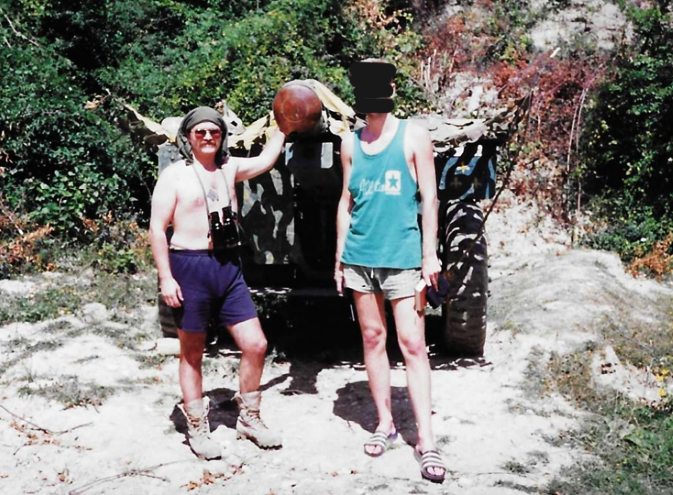
Figure 3 - A 105mm M101 howitzer. One of the weapons we were monitoring. July 92
UNMO transportation at the time was by Russian made UAZ jeeps and locally produced Volkswagen Golfs. The UAZs were infamous for issues with the carburetor flooding and occasionally catching fire. They were so underpowered we occasionally had to reverse up steeper hills to get to our OPs.
The Golfs were locally made and easy to maintain. However, the Tvornica Automobila Sarajevo (TAS) factory had stopped production early in 1992 and spares parts were hard to find. On a few occasions our UN Golfs were targeted for spare parts. For example, on the 17th of September we woke up at Papa HQ to find the windscreen of the car was missing. It had been parked overnight in full view of the police guard post. The radio, spare tire, water jerry can, fuel and other items were untouched. It seems that someone just needed to replace their windscreen. Of course, a report was filed but there were no doubts that this incident did not even register on the priority meter. Personally, I was impressed by such a brazen move and consideration to leave our water and spare tire. We had to drive that windscreen-less Golf for about a week before we got a replacement vehicle.
The Golfs did not provide much protection from small arms fire or artillery and were eventually replaced with Nissan Patrols and armoured GMC Suburbans. More than a few of the civilian Golfs found their way onto military flatbeds when certain Battalions ended their mission and left the city to their home countries.
Short leave was always a welcome break and at the end of August I went to Pula with a couple of the Norwegian UNMOs for a few days (my liver has never forgiven me). When we got back to Zagreb on the 3rd of September for the flight to Sarajevo, we found out that an Italian Air Force Hercules had been shot down on approach to the Sarajevo airport. Air travel into Sarajevo was suspended so we made arrangements to fly to Belgrade and hop on the French resupply convoy to Sarajevo.
We departed Belgrade at about 0545 hrs on the 8th of September in the back of a French Army truck. The scenery was incredible along the route but a bit hard on the butt for the 12-hour trip. The French convoy commander had ordered that the truck canvas flaps be lifted so that any forces along the route would see that they were carrying unarmed observers – and hopefully avoiding pot-shots at the convoy.
When we finally got to the access road to the airport in Butmir (the infamous Butmir 500) in the late afternoon and stopped, waiting for clearance to cross, it became apparent that we had driven into the middle of a probe by a Bosnian Territorial Defence Force (TDF) unit toward Lukavica. I looked down into the brush to see one of the TDF soldiers put his finger to his lips as if to say ‘shush’ and winked. Small arms fire then erupted resulting in 2 French soldiers being killed and three injured. Luckily, despite the zinging all around our vehicle, no UNMOs were hit – having flaps upon the truck probably prevented death or injuries. The convoy then immediately crossed the airfield and we found shelter in the French Bn lines until the next morning.
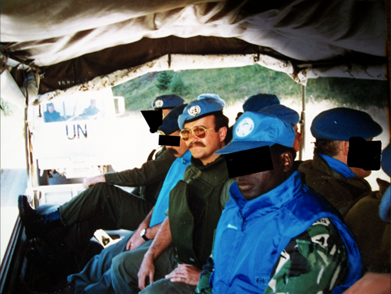
Figure 4 - French Resupply Convoy from Belgrade to Sarajevo 8 Sep 1992.
The rest of September was a blur of rotating from PTT to Papa HQ to OPs accented by continuous shelling onto the city. Near the end of September I received word of an impending transfer to UNMO HQ in Zagreb to be the Information Officer after my upcoming leave. But first I was to travel to UNMO Sector North to fill a gap in Topusko until their new UNMOs arrived.
On September 24th I flew to Zagreb and then drove to Topusko via Petrinja. Two of the UNMOs (Bo Loggarfve SWE and Jimmy O’Neil IRE) were facilitating a body exchange between the Serb Krajina and BiH forces. However, the Serbs had shown up without the Muslim bodies which increased tensions in the area. On the 27th Bo and I drove with a Dutchbat (?) escort to meet with the local Serb commander, pick up gravediggers and oversee the exhumation and transfer of the eight BiH soldiers. The next day I went on leave or a week and to my new job at UNMO HQ.
Zagreb – UNMO Information Officer
After a side-trip to Sector North for a few days in late September 1992 and a week of leave, I was transferred to Zagreb UNMOHQ as the Information Officer (MIO) under General Bo Pellnas, the Chief Military Observer (CMO). This position was distinctly separate from the UNPROFOR Military Information Office in that we focused on those locations where UNMOs were located and patrolled.
My initial task was to convert the existing office into an analysis center to build up a more accurate picture of the status and location of opposing forces in our areas of responsibility. This meant setting up maps and talc overlays showing units (UN and opposing forces), boundaries, incidents, movements, mines, etc., and updating them from the UNMO SITREPs. I was soon joined by two very capable Kenyans – Air Force Captain Francis Ogolla (future Kenyan CDS) and Naval Lieutenant Jimmy Walker and together we were able to get the office up and running in short order. The information we provided complemented that from the Sector Battalions and was apparently appreciated by both UNMO HQ and UNPROFOR Command for its timeliness and accuracy.
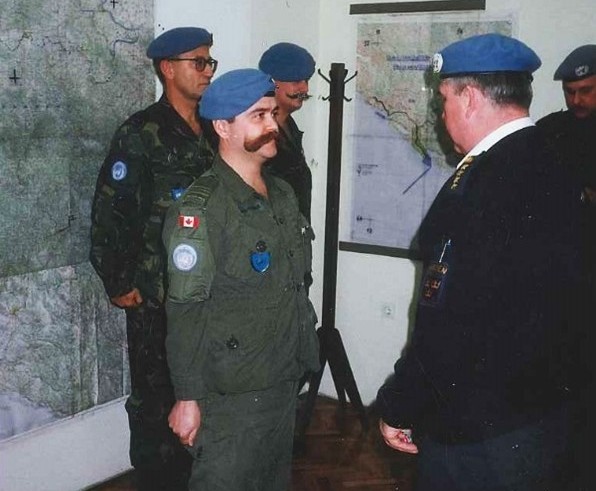
Figure 5 - Receiving UNPROFOR medal from Gen Pellnas October(?) 1992
One of the advantages of being an MIO meant that I was able to visit the other sectors to assess the situation on the ground and to get more accurate information that unsecure communications prevented. We (me and at least one other from UNMO HQ) would drive usually unescorted to the Protected and Safe Areas and meet up with the UNMOs there. As a result I was able to see quite a bit of the Former Yugoslavia including places like Erdutand Vukovarin Sector East (East Slavonia); Daruvar, Pakrac and Lipik in Sector West (West Slavonia); Topusko, Karlovac in Sector North. Across the border into Bosnia we visited Tuzla, Banja Luka and Bihac, and many parts in between.
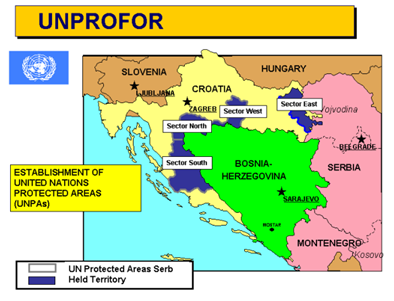
Figure 6 - Graphic from de.wikipedia.org
Two of those visits were quite memorable for me. The first was an escort mission for the UN Special Rapporteur of the Commission on Human Rights, Tadeusz Mazowiecki, former Prime Minister of Poland, on October 20, 1992 to visit the Muslim/Croat IDP camp in Trnopolje near Prijedor and the Serbian refugee center in Banja Luka.
The difference between the Trnopolje and Banja Luka facilities was stark. Muslim and Croat Bosnian internees in the Trnopolje camp were subject to significant human rights abuses and slept in an unlit gymnasium on blankets or carpets over lice and flea infested straw and along corridors in other buildings. For some of them though, it was better than trying to exist outside the camp where harassment could be unpredictable and deadly. Serb refugees and IDPs from other parts of Bosnia and Croatia found conditions much better at the refugee center in Bosnian-Serb controlled Banja Luka.
Journalists had brought the Prijedor internment camps at Omarska, Keraterm and Trnopolje to the world’s attention in August 1992, prompting the intervention of the International Red Cross. Omarska had reportedly closed by the time of our visit and Trnopolje closed a month later in November 1992.
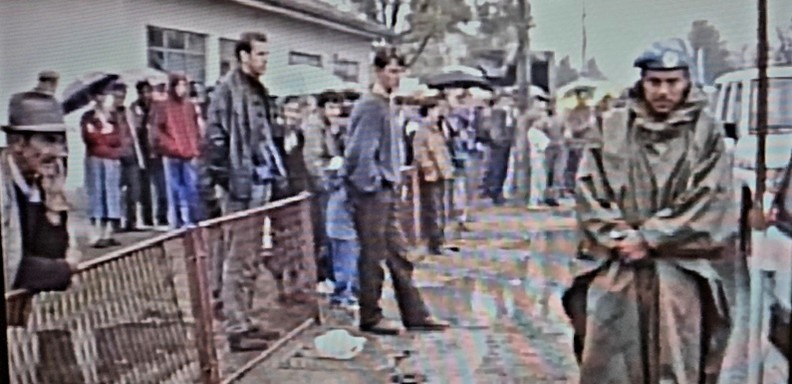
Figure 7 - Trnopolje, 20 Oct 92 with Kenyan UNMO Lt(N) Jimmy Walker.
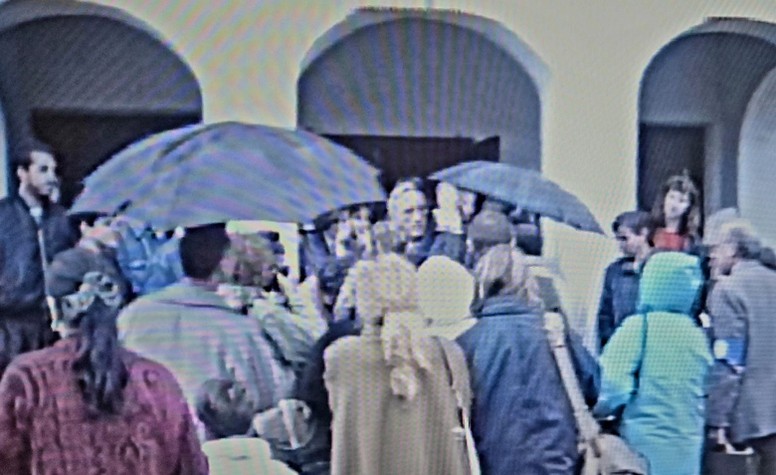
Figure 8 - Mr. Mazowiecki SR for Human Rights Trnopolje 20 Oct 92.
The second visit that stood out was New Years Eve 1992. We UNMOs not on leave remained in Zagreb to work over the holidays. A few days before the 31st of December 1992, another UNMO and I were tasked with taking a replacement generator to the UNMO office in Bihac. However, at the last minute the other UNMO was not able to travel. As the UNMOs in Bihac really needed the generator I volunteered to take it myself. I had already visited Bihac a month or so ago with the new UNMO Deputy Chief and was familiar with the route and location of checkpoints on both sides.
On the morning of the 31st I loaded the vehicle with the generator, many packs of Marlboros (an effective ice-breaker at check-points), some refreshments for the team and drove to Bihac. Surprisingly, the checkpoints were wide open at every location except for one of the Bosnian Serb locations. Mines had been dragged off to the side of the road and barriers lifted. It was like everyone had agreed to take the day off to prepare for New Years Eve.
After off-loading the generator it was decided that I should stay the night as I would not be able to get back to Zagreb by nightfall. One of the UNMOs (Riyad from Jordan(?)) prepared an excellent meal and we proceeded to contribute to the expansion of the office Christmas tree using sustainable recycled materials.
New Years Eve celebrations that night were about as loud as I have ever seen. It was impossible to distinguish between celebratory gunfire and the regular light and heavy caliber bombardment of the town. However, I recall that the morning of the 1st of January 1993 was relatively quiet and even the Bosnian Serb checkpoint was a wave-through.
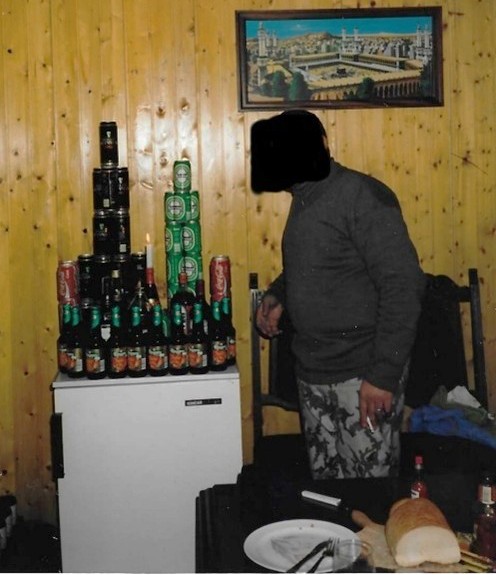
Figure 9 - UNMO Bihac Xmas Tree 31 Dec 92
Return to Sarajevo: Utilities Repair Team
On the 12th of January 1993, I returned to Sarajevo in a Russian IL-76 Candid aircraft leased to the UN. Given my MOC (82A), it was quite interesting seeing and sometimes travelling in former Soviet transport. However, this trip offered a special treat, compliments of one of the Russian UNMOs. Shortly after take-off I was asked if I wanted to fly in the navigator’s station in the nose of the aircraft. My response was an enthusiastic affirmative. I soon realized that I was not expected to sit in the navigator’s chair (he was going to need that spot) but to lie prone on the plexiglas itself. I happily did so and took as many photos as I could for the remainder of the flight (below are a few).
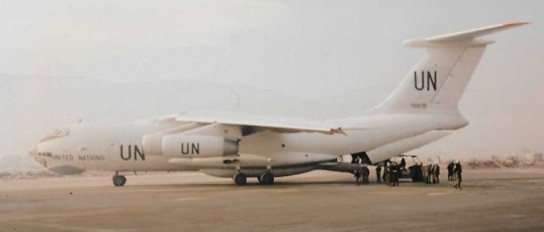
Figure 10 - The ride - IL-76 Candid.
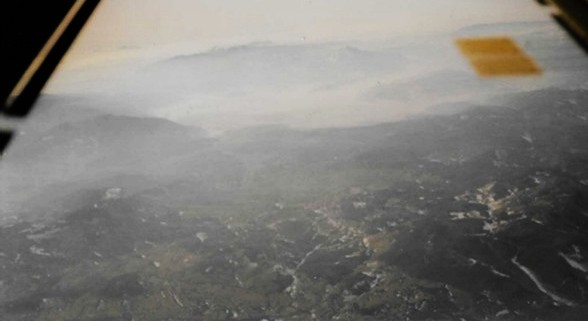
Figure 11 - The view.
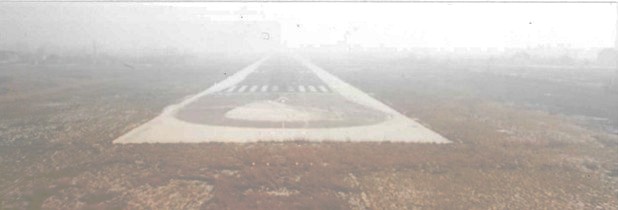
Figure 12 - The landing.
The Papa UNMO Utilities Repair Team in Sarajevo was responsible for escorting civilian technical teams and providing on-site liaison and communications during water, gas and electricity repairs around the city. We would position ourselves near where the technicians were working to show the UN flag to whoever might be watching and that the workers were conducting repairs approved by all sides.
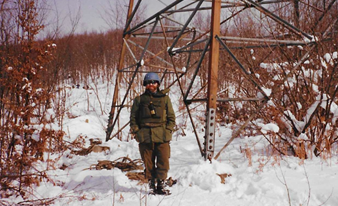
Figure 13 - Electricity repair Pylon #10 (Jezero?) Sarajevo Jan 93.
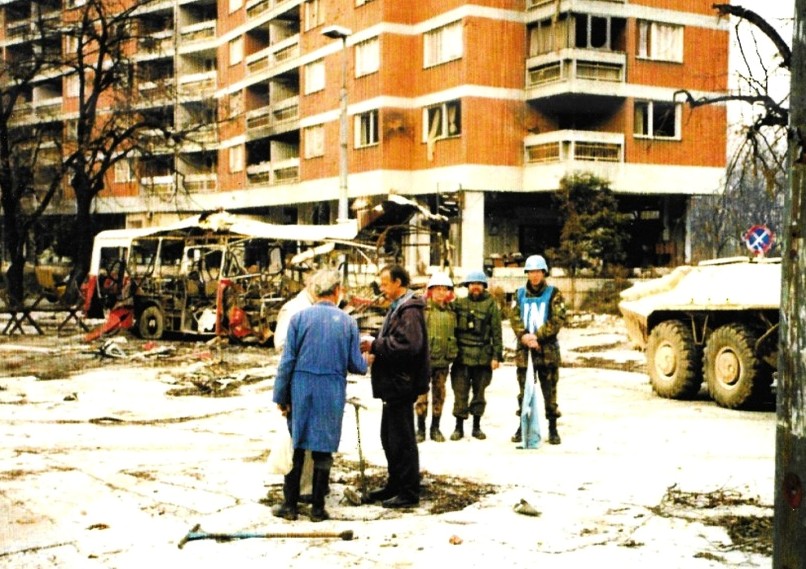
Figure 14 - Utilities Repair in Kovacici near Vrbanja Bridge March(?) 1993.
The UNPROFOR Military Engineer based in the PTT prioritized and planned the repair missions coordinating with the Bosnian-Serb Liaison Officer and Bosniak command. For missions located in high-risk areas on the front lines he would arrange transport from one of the UN battalions in the city or occasionally from Kiseljak. For less risky missions we would transport the technician in an UNMO vehicle. Despite the planning, liaison and precautions the repair missions came under sniper and anti-aircraft fire fairly frequently.
When we were not on repair missions we would sometimes be tasked to accompany the Senior Military Observer (SMO) or other staff to meetings in Bosnian Serb held territory in Pale or Lukavica or to pickup supplies in Kiseljak. The three months from January to March went quite quickly and in April I was transferred to my fourth and final Sector. It was time for me to leave Sarajevo one last time and quite frankly, I was ready.
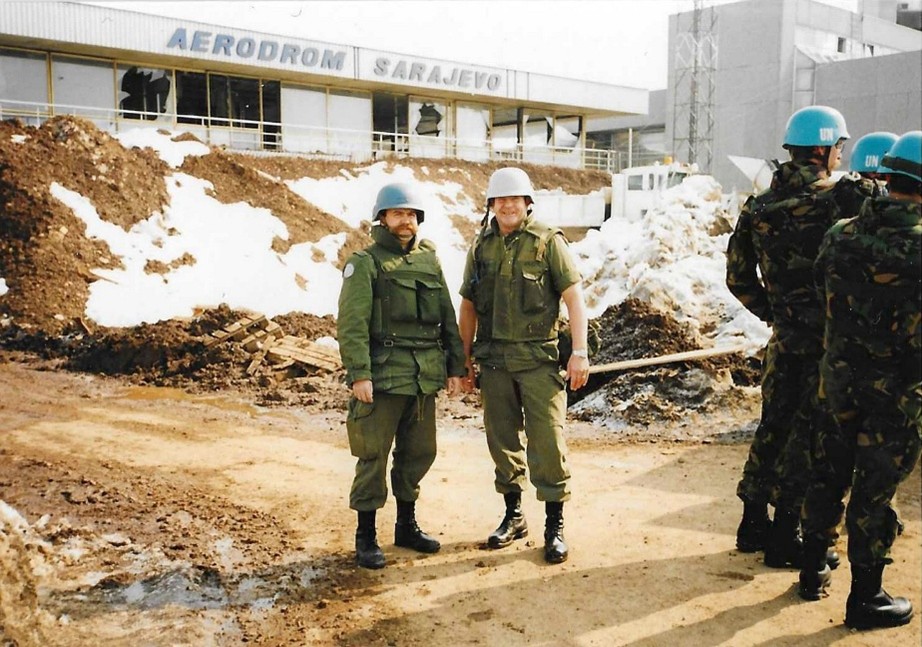
Figure 15 - Departure day - with Maj Kent Carswell to see me off.
Dubrovnik/Prevlaka
After a few days in Zagreb HQ, I caught a ride with an UNMO heading to Dubrovnik, Croatia. The drive along the coast with warm winds off the Adriatic was an amazing tonic. My role was to be Administration Officer/Observer with our HQ in the Villa Orsula and sub-offices in Dubravkai n the tri-border area with the Serb Republic of BiH and Montenegro and on Prevlaka Peninsula in the former JNA base overlooking the entrance into the Bay of Kotor.
Prevlaka Peninsula had been designated a “Blue Zone” which was off limits to all parties to the conflict. Our job there was to monitor, repel (through persuasion) and report any incursions into the 100-meter exclusion zone around the peninsula. Aside from a few small fishing boats there were no incursions during my tour there. The only other residents on Prevlaka were a couple of goats, lots of snakes (including the poisonous Poskok or horned viper), jackals, wild boars and a family of seven cattle – a bull, three cows and three calves which the UNMOs affectionately named Boutros, Boutros and Ghali.
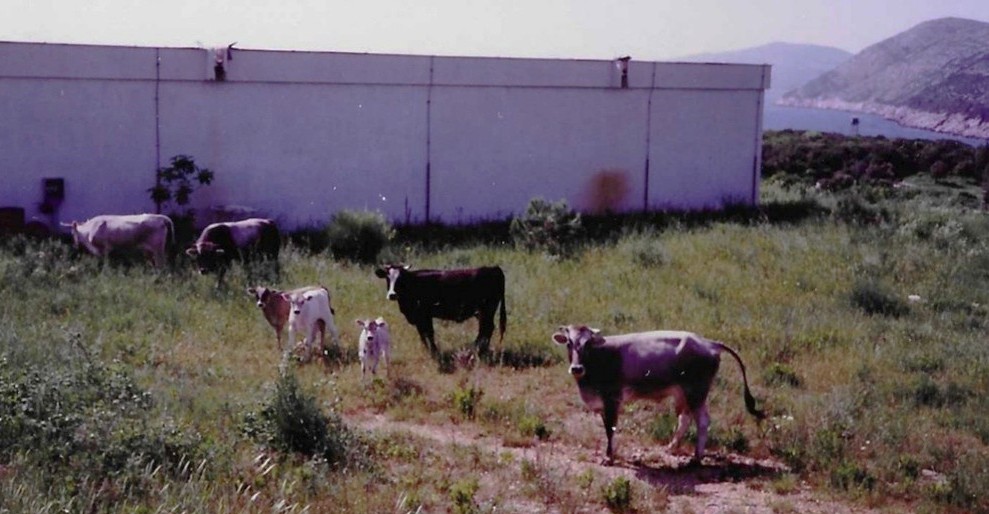
Figure 16 - The Prevlaka herd include 3 calves affectionately named Boutros, Boutros and Ghali.
The Dubravka site required vehicle and foot patrols along the borders. There was occasional gunfire but nothing to the extent of the previous year when Dubrovnik city and the airport had been shelled.
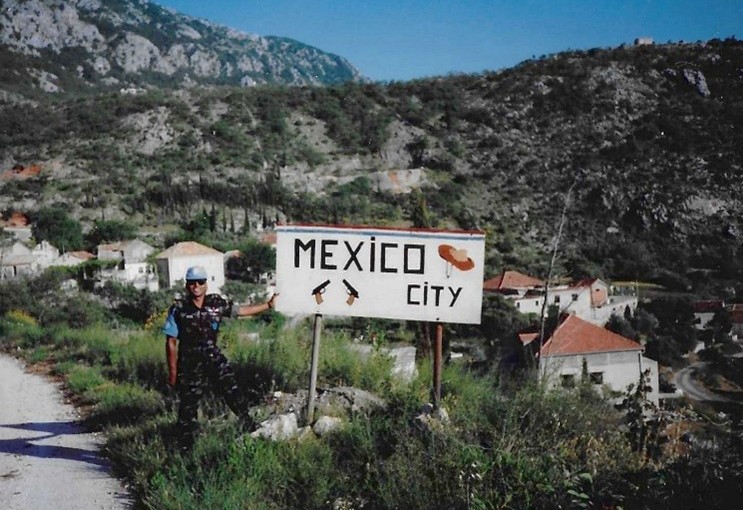
Figure 17 - Mexico City was quite calm during my tour.
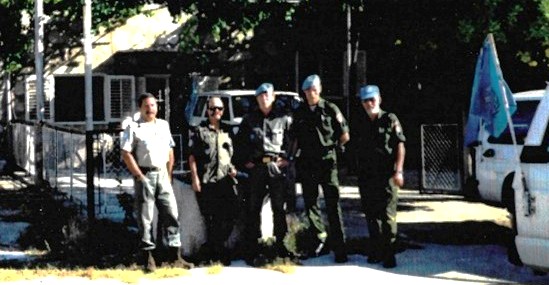
Figure 18 - Dubravka office and accommodation.
Dubrovnik was a welcomed opportunity to decompress before returning to Canada in July 1993. I cannot imagine how it would have gone if I had returned directly from Sarajevo.
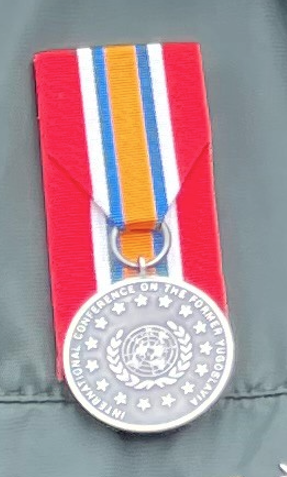
I remain very grateful to the CF and my Branch for the chance to have served as an UNMO in the UNPROFOR mission. It remains one of my proudest achievements. It also ignited an interest in the UN and humanitarian work and by October 1994 I was a civilian observer on a 6-month mission with the International Conference on the Former Yugoslavia (ICFY) based in Montenegro. I have prepared a short piece on that short and largely unknown mission for the Balkans 35th Commemoration.
Thanks
Wayne Nightingale Major (Retired)
Have feedback or a story to share?

.jpg)