IFOR, Reflections on Operation Alliance, Rotation One, December 1995 to July 1996, a Commander's Perspective
WARNING: Due to the nature of the conflict and operations in the Balkans, some of these veterans' stories may contain graphic or disturbing content. Please use your discretion. If a story adversely affects your mental health, consider seeking help by consulting the agencies listed in the Resources section of this website.

Context
IFOR (OPERATION JOINT ENDEAVOR) was precedent-setting, as it was NATO’s first crisis response deployment. It was also notable for its success in using a negotiated peace agreement - endorsed by the warring parties - to bring to an end a lengthy and destructive conflict. It incorporated specific required actions on a tight and non-negotiable time schedule, and used a large, heavily-armed multi-lateral military force to ensure compliance. Key tasks included separating the warring factions, demarcating boundaries, removing heavy weapons and ensuring freedom of movement for civilians and humanitarian organizations
OP ALLIANCE, Canada’s participation in IFOR, was also precedent-setting, as it involved the first operational deployment of a formation headquarters (that of 2 Canadian Mechanized Brigade Group) abroad since the Korean War. More significantly, however, from the perspective of the Canadian Forces, it was Canada’s first new high profile operational deployment since the Somalia Enquiry had severely damaged the reputation of Canada’s military. The Government could be forgiven for being gun-shy. Success would be a first step towards redemption; failure or controversy in any respect would be disastrous. There was a lot on the line.
Building the Contingent
The guidance we received in 2 CMBG was to generate a force of not more than 1,000 personnel - led by a brigade headquarters capable of taking under command units from other NATO nations, with the mission of assisting in the implementation of an as yet not finalized peace agreement for the Bosnian civil war. Other capabilities to be incorporated in the force were not specified. Nor was any detail provided with respect to: friendly forces (i.e. higher formation, possible attachments or flanking forces); “enemy” forces; likely tasks; area of responsibility; or accommodation/basing possibilities.
The Canadian Government was understandably sensitive about taking on new commitments of this nature at this juncture (i.e. while the shadow of the Somalia Enquiry prevailed). Thus, a cloak of silence was thrown over the entire enterprise. So as not to expose the Government’s ongoing deliberations and raise expectations in the media, I was not permitted to visit the theatre for a reconnaissance (I did, however, send my G3 and a few of his close friends to Bosnia to get a feel for the lay of the land, so we were not flying entirely blind). I was similarly embargoed from direct contact with the commander of the division to which my brigade might report. These restrictions certainly complicated the planning process. But a more serious problem was that delays in decision-making led to related delays in critical steps in the deployment planning process. Most seriously, the development of Rules of Engagement (ROE) was late to need, and in the end, we deployed with draft ROE.
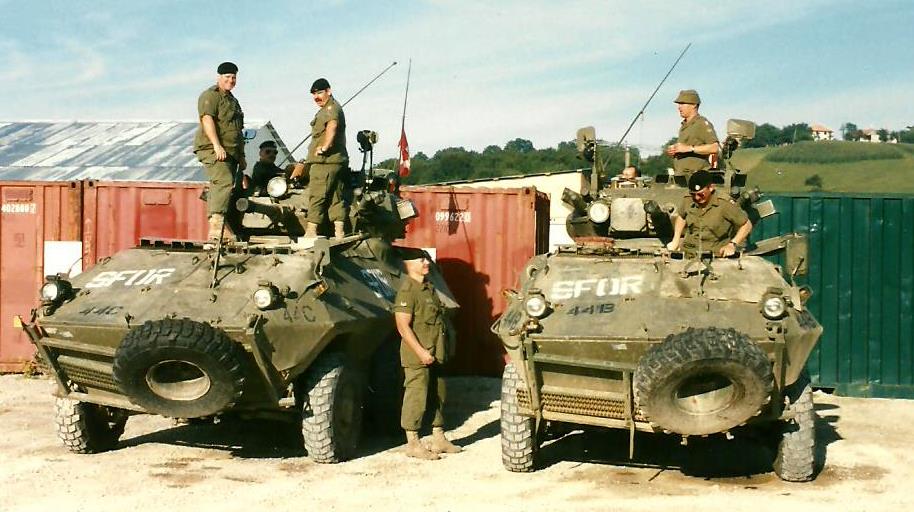
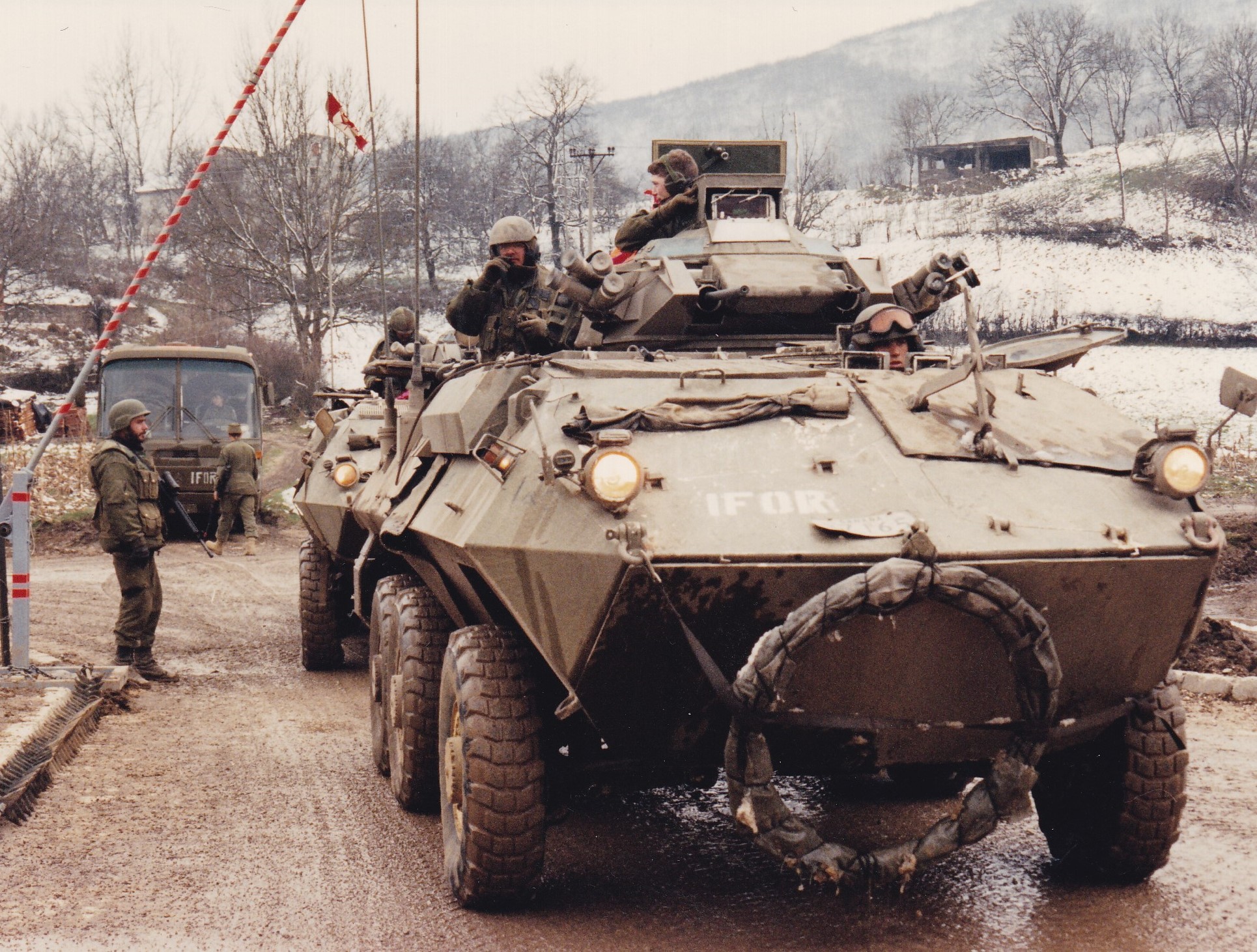
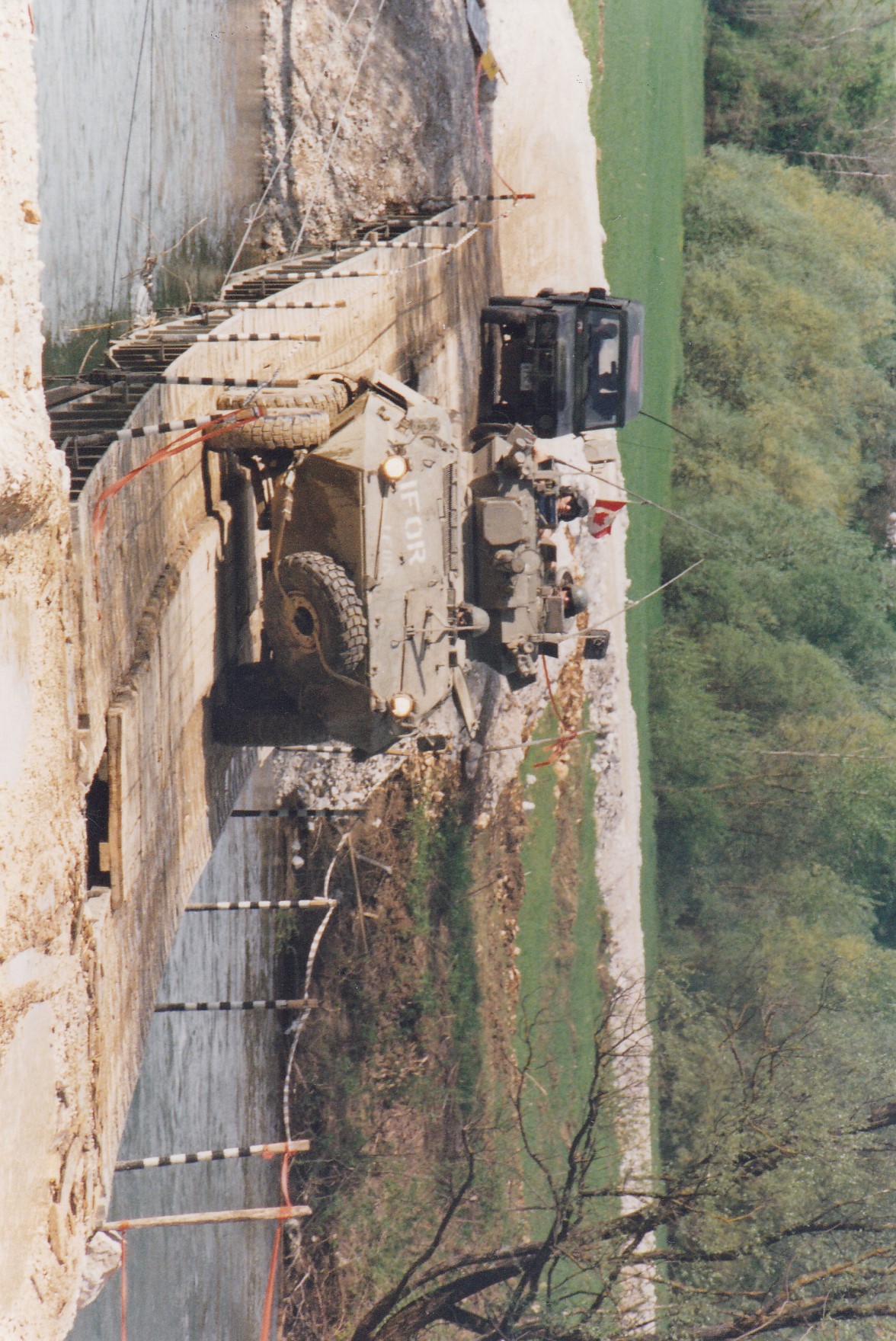
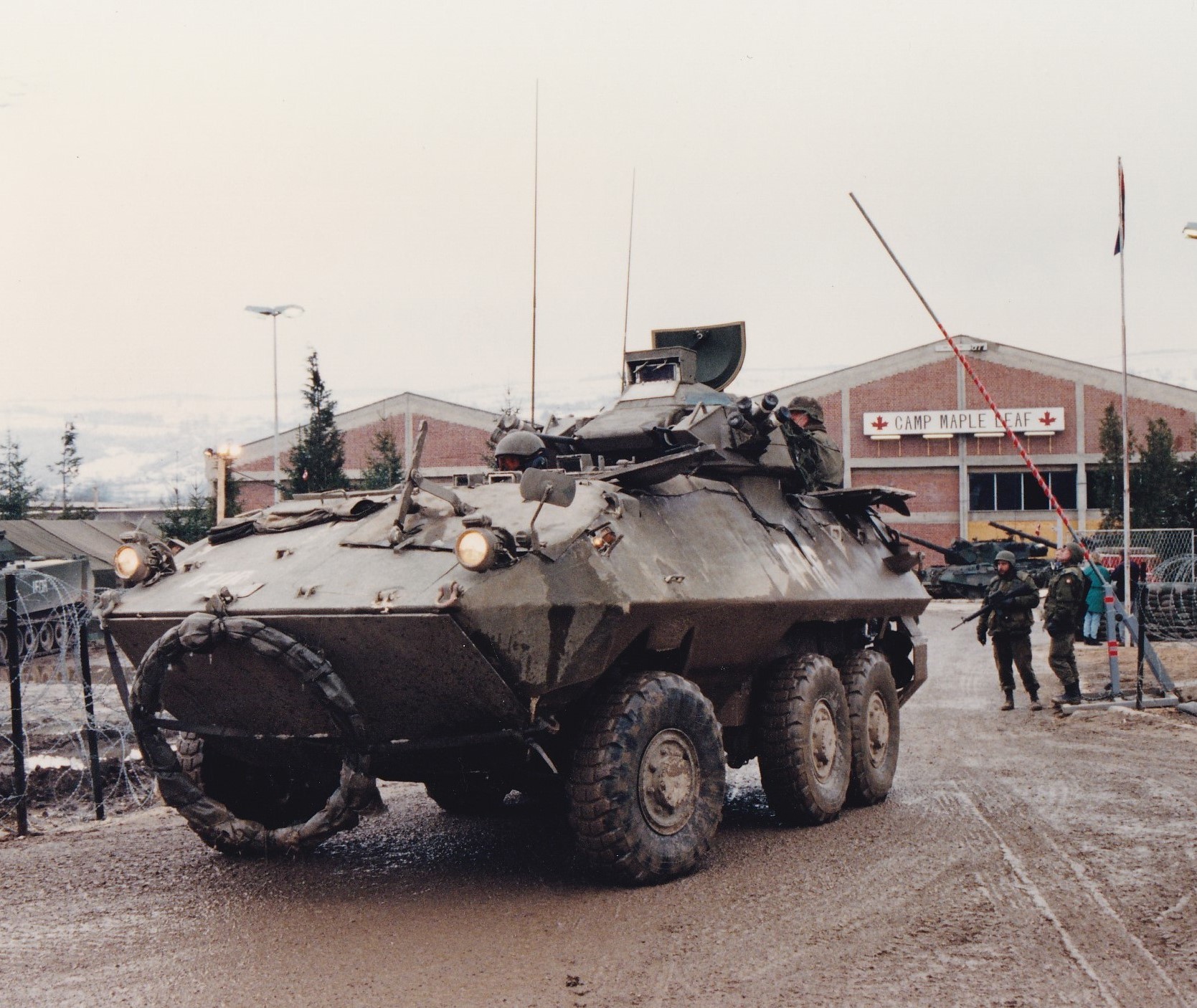
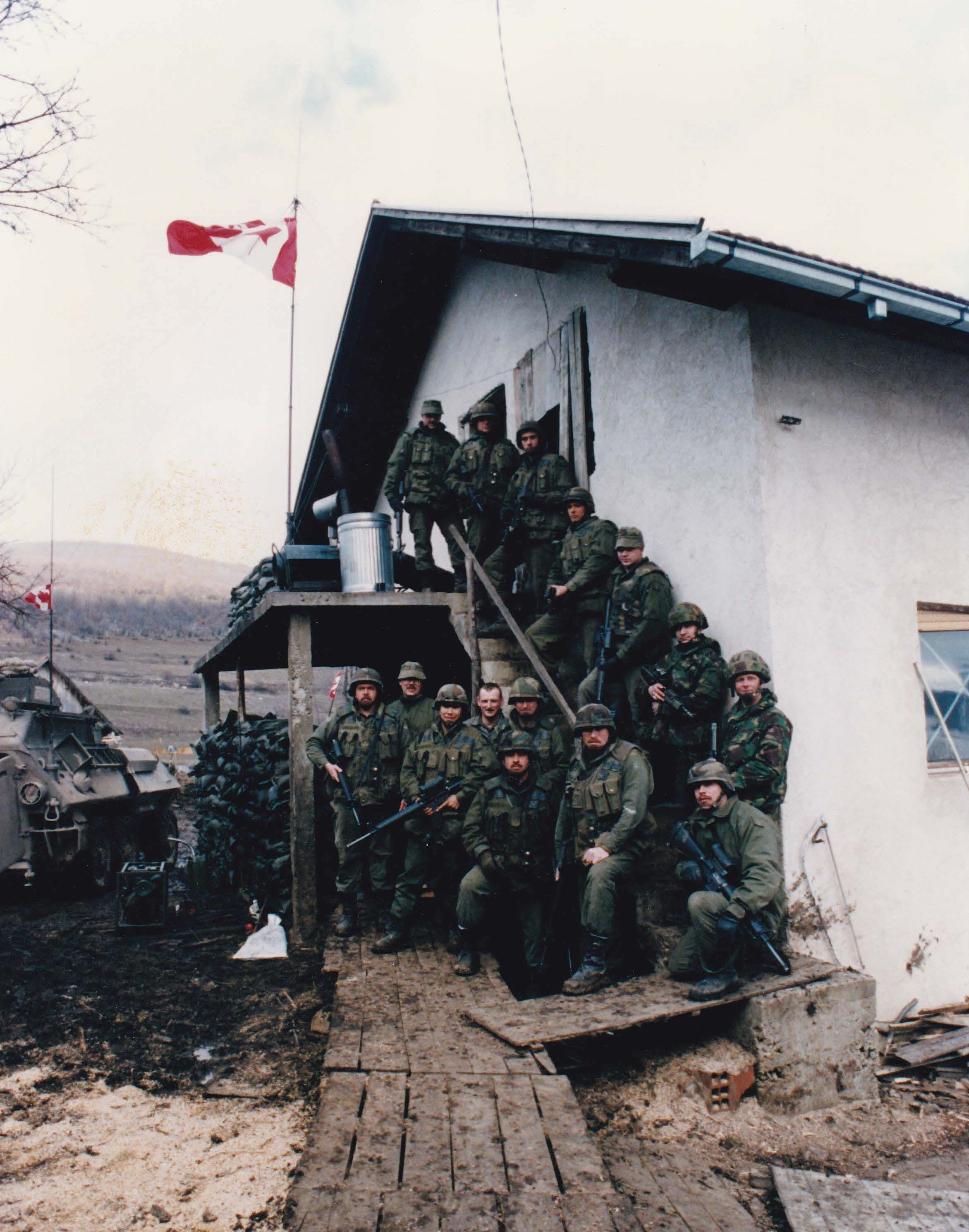
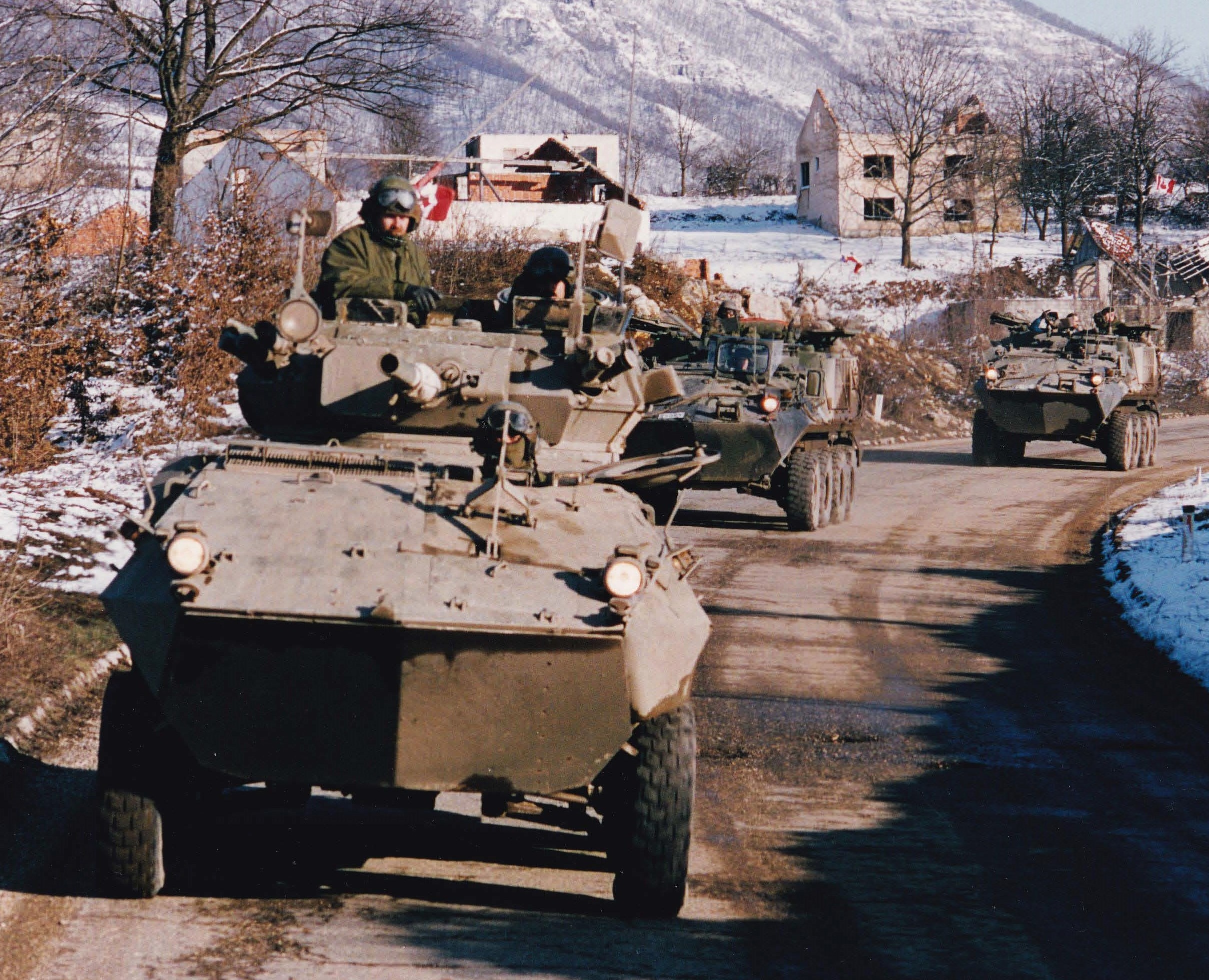
Designing the Canadian Contingent would have been an interesting Staff College exercise, but the mission was real and lives would be at stake. As a start point, we blocked out rough numbers for the brigade staff, the headquarters and signals squadron, a national support element (i.e. a light service battalion), engineers, military police and medical/dental detachments. That left us something like 300-350 establishment positions for manoeuvre elements. Risk management, flexibility of employment and bang-for-the-buck were the key factors. Ultimately, we threw convention out the window and settled on a reinforced mechanized infantry company equipped with Grizzly AVGPs and an armoured reconnaissance squadron in Cougar AVGPs. We opted for wheels vice tracks in view of the road mobility and mine protection advantages they provided. The infantry company group (ultimately G Company 2 RCR) would include a support weapons platoon with detachments of Bison-mounted 81mm mortars, TOW Under Armour, pioneers and recce. G Company Group, with 185 personnel, thus deployed with a range of capabilities well-suited for operations in an uncertain environment. In the event, we grouped the company with the British armoured regiment (-) that we were assigned once in theatre, forming a small but potent battle group and conferring upon the company the essential advantages of working in a unit context. The reconnaissance squadron (A Squadron RCD), for its part, was to have three seven-vehicle recce troops mounted in the Cougar AVGP, equipped with a 76mm gun capable of firing HE, HESH and smoke. This organization was, again, very well-suited to the IFOR mission: the characteristic utility of recce for economy of force operations matched up perfectly with the tasks required for Dayton implementation; and the Cougar’s gun would have provided valuable direct fire support if needed. The squadron also had the secondary task of crewing two Leopard tanks (for both mine clearance and limited fire support tasks).
The logistical implications of this force structure were significant. So, after we had blocked out the major elements of the Contingent, there was still a lot of establishment tinkering required to keep within the 1,000 personnel ceiling. There were also notable force generation challenges. These organizations had not been tested in a pre-deployment training and test exercise, and we were less than a month from likely deployment. Consider, for example, the demands our force structure decisions placed on 2 RCR - as the battalion was equipped with tracks and we had decided to deploy with wheels. Fortunately, being in the field frequently because of their role as “school troops," 2 RCR was always at a high state of readiness, and thus quickly up to the fast balls they were thrown. Overall, flexibility of mind and a can-do attitude within 2 CMBG proved equal to all of the challenges that needed to be faced in the force preparation phase.
Getting There from Here
During the period when the Government was engaging with NATO on the possibility of Canada contributing to the IFOR mission in Bosnia, the Canadian Forces were in the process of dismantling the infrastructure used by Canada’s commitments to UNPROFOR in Croatia and Bosnia (OPERATIONS HARMONY and CAVALIER) and repatriating vast amounts of materiel. This was a Herculean task in its own right.
But even while this trove of functional and/or non-functional materiel was being catalogued, packaged and shipped west, logistics staffs were being deployed to warehouses in Croatia to begin sorting, identifying and setting aside items that might be needed in Bosnia if discussions with NATO about a new mission came to fruition. At some point, serious contingency planning commenced. And once a force structure was approved, establishments were created or updated and logistics staffs and unit recce parties began to identify and source equipment, spare parts, ammunition, etc.
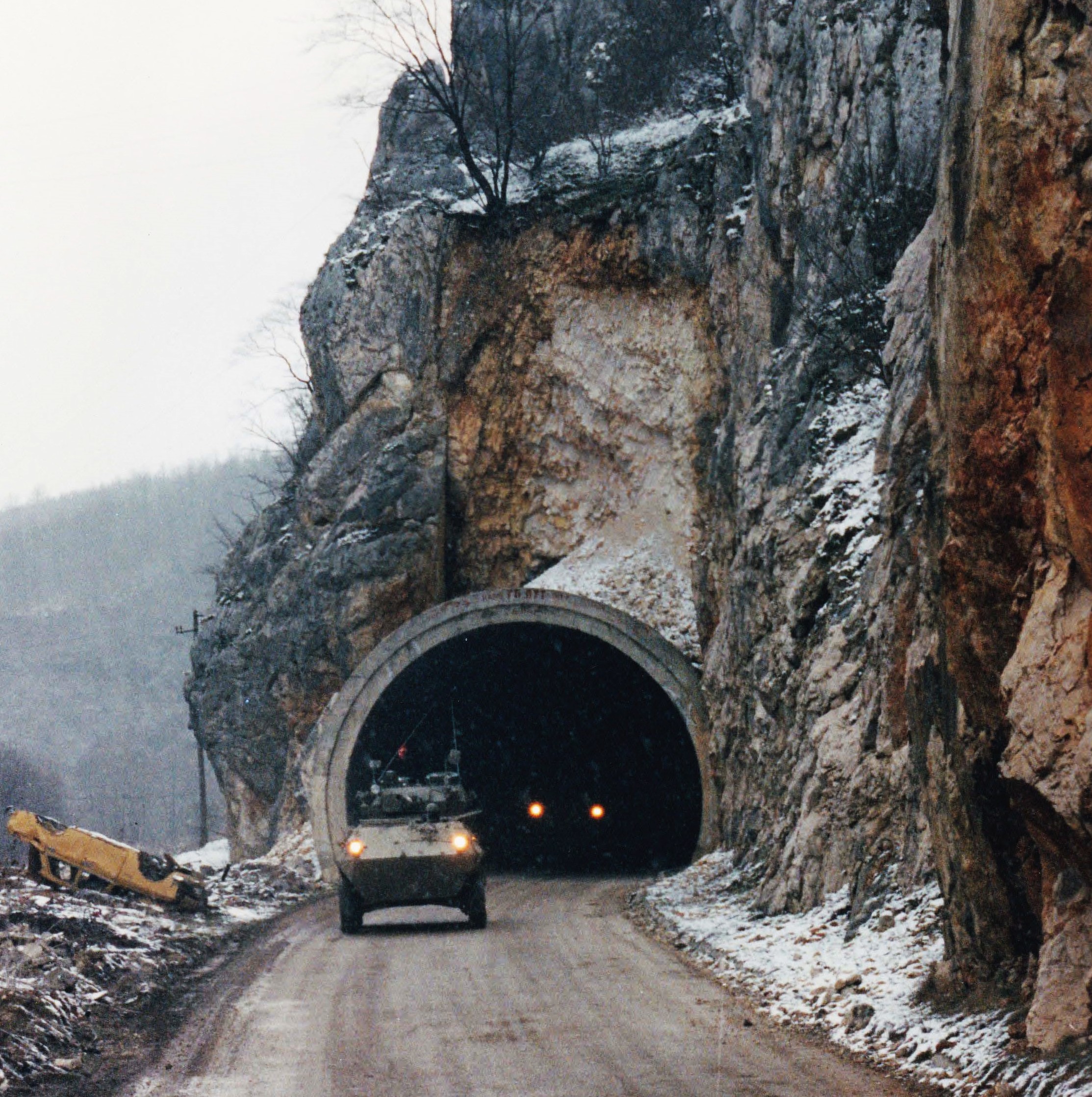
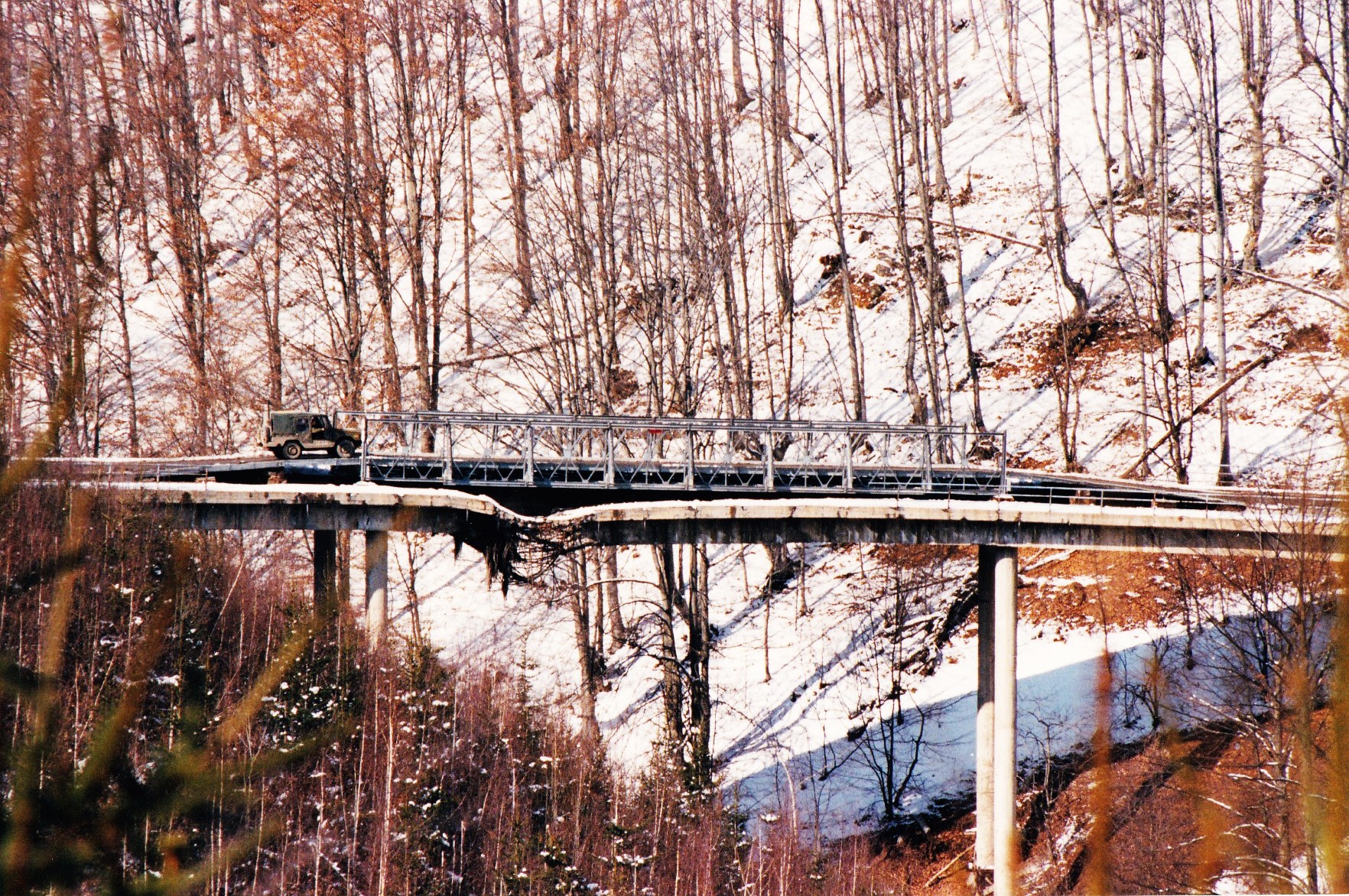
When the green light for the operation was finally given, the start date for the IFOR mission was less than a month away. Movement planning for materiel and personnel began in earnest - and as quickly as possible the component parts of OP ALLIANCE began to move east, from CFB Petawawa, CFB Gagetown and CFB Montreal in Canada and from ports, warehouses and compounds in Europe, by sea and by air, destined for airfields and ports in Croatia, and from there moved over war-damaged roads up to some still unknown location in the hills and mountains of war-ravaged Bosnia - in winter. How this was accomplished is still a mystery to me - something I ponder at zero-dark thirty when I can’t get back to sleep. How did we get there - quickly and in good order? Thank God for logisticians - the magicians who make military operations possible. I am forever in their debt.
Risk Management from the Outset
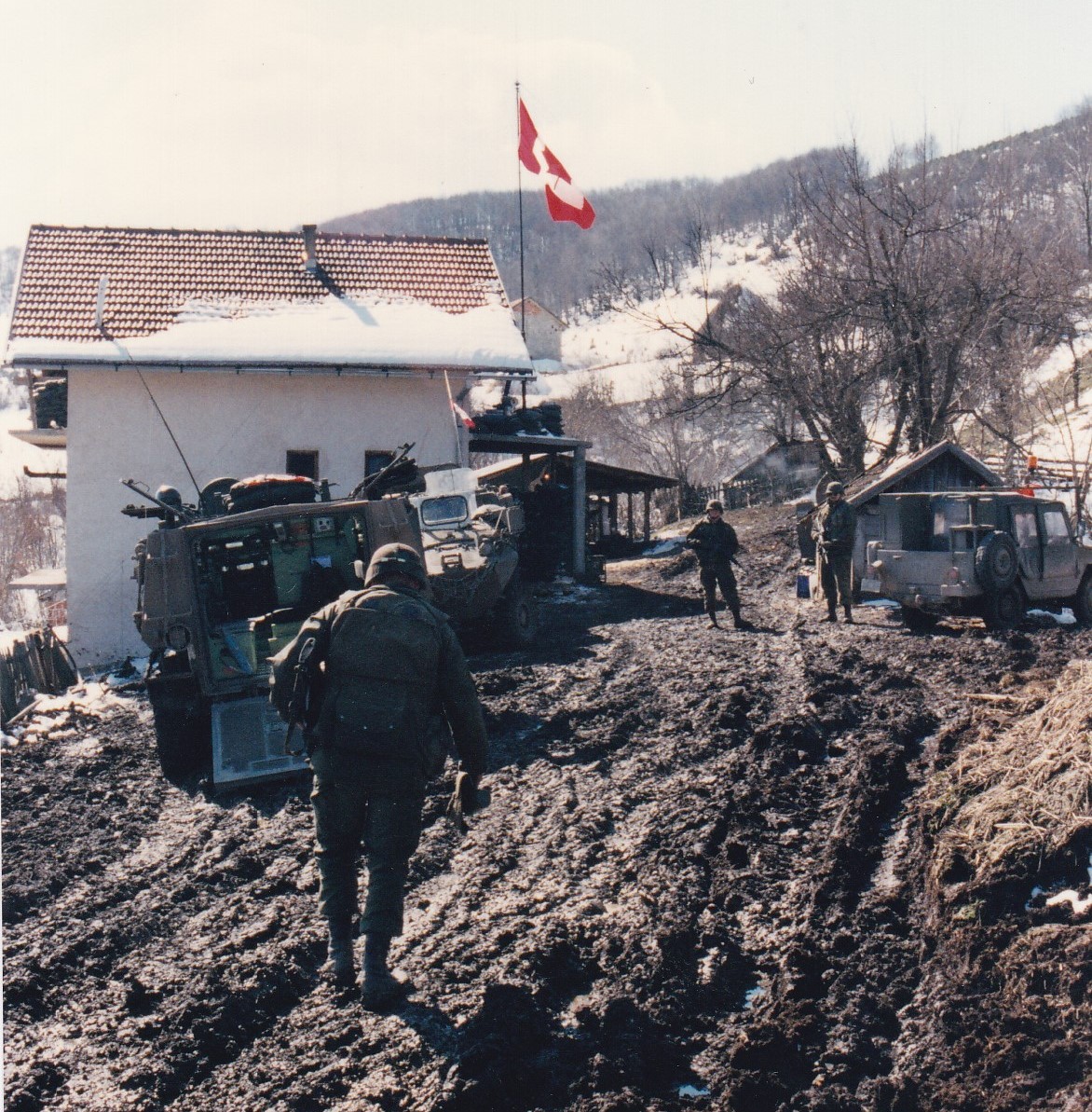
In late December 1995, the advance parties for the Canadian Contingent began arriving In the Bihac Pocket, at the centre of its assigned area of operations. Although the IFOR operation had already begun, the Canadian Contingent was still in transit and only beginning to organize in theatre. A basing plan was determined: brigade headquarters, the signals squadron and the advanced surgical centre were to be in Coralici; the national support element would be in Velika Kladusa in the far north of the AOR; and the infantry company group, armoured reconnaissance squadron and engineer field squadron would be near the village of Kljuc in the far south. Engineers were working feverishly to clear the bases and build infrastructure - even of the expedient sort. Logisticians were receiving materiel and preparing it for issue to the Contingent’s infantry company and recce squadron, whose personnel were yet to arrive in significant numbers. And signallers were setting up the brigade headquarters; establishing a dependable communications network across the vast and rugged terrain of the brigade’s AO; and meeting the interoperability challenges of connecting with attached NATO and non-NATO elements (a story worth telling in its own right).
The brigade headquarters was destined to work under command of Multinational Division Southwest (provided by 3 UK Division), but that would not happen until the Canadian Contingent was declared “operationally ready” in theatre - something that was several weeks away. A British armoured regiment (-) (Queen’s Royal Hussars) and a mechanized infantry battalion from the Czech Republic were to be placed under command of what would become 2 Canadian Multinational Brigade (2 CAMNB), but these units were also in transit and were still under their own national command.
In the midst of this organized chaos, we received a phone call from Division Headquarters. Mujahedeen fighters, originating from numerous Islamic nations, and who had established themselves as the most feared allies of the Bosnian Government during the civil war, were concentrating in the Bihac Pocket, a few kilometres from our brigade headquarters in Coralici. The Division Commander “requested” that we “picket” the Mujahedeen camp until arrangements could be made to escort them out of the theatre. He didn’t yet have the authority to order us to take on this task - and there were risks associated with it. If any Bosnian soldiers were to go rogue and break with the Dayton agreements, the Mujahedeen were the most likely candidates. Yet this was an opportunity to get off on the right foot with a Division Commander I had yet to meet - to demonstrate that the Canadians were can-do operators who could be depended upon in a pinch. However, my only combat arms force at that point was a D and E platoon that was in the advance party to secure the three Canadian base camps during this phase of the operation. Diverting this platoon to the picket task, and backfilling with engineers or signallers for camp security, was not an appealing option.
In the event, we sent out an MP detachment to confirm the location of the Mujahedeen camp. This gambit put the MPs at risk, but also served to underline the scope and delicacy that a picketing task would entail. So, with regret, I declined the Division Commander’s request. In response, he almost immediately detached to under my command for picketing and other related tasks a British mechanized infantry company equipped with Warrior infantry fighting vehicles. His assessment of required troops to tasks brought new clarity to the situation! It was perhaps a minor incident, but it is indicative of how risk-aversion - related to the importance of OP ALLIANCE for restoring the reputation of the Canadian Forces - would factor into operational decisions in theatre. I like to think that we always tried to put mission first, as is our duty. At the same time, the requirement of force protection was a constant priority, and finding the right balance between the two is the essence of a commander’s responsibilities. But in OP ALLIANCE, there was even more at stake, as there was no margin for errors that would reflect poorly on the effectiveness of the Canadian Forces.
Getting Started.
The fact that Roto 1 of OP ALLIANCE was exactly that - the initial deployment of a new Canadian commitment that would last in one form or another until 2004 - was a major complicating factor. The deployment happened in a rush, with neither the time nor information required for normal pre-deployment preparations. As the Canadian Contingent was late to the party and the “Dayton clock” was ticking, multiple tasks were of necessity performed concurrently at the outset (I described it as sucking and blowing at the same time). On the Canadian national side of the operation, arrangements for housing and supporting the force (providing for everything from sewage to sandwiches) needed to be completed. This was also the case for the Czech and British elements of 2 CAMNB. On the IFOR side, a multinational brigade needed to be formed on the fly, while tasks mandated in the Division’s initial operations order needed to be performed even while that process was taking place.
The command groups of constituent elements of the formation met for the first time on the morning that the initial Brigade operations order was issued (a veritable brick that very nearly didn’t happen, as all of the photo-copiers in the headquarters crashed when it was finally ready to be printed). Thereafter, a concerted effort was required to establish internal communication and liaison, translation (in the case of the Czechs) and training and standardization in such key components of the mission as ROE and the Law of War - basics that would normally have been addressed in the months preceding deployment.
At the same time, brigade headquarters was scrambling to develop a comprehensive set of formation SOPs - a particularly important requirement in a multinational force. These SOPs were in many cases invented as we went along. When were weapons to be carried? When were they to be loaded? What was a combat load for a vehicle leaving a camp? How was movement within the area of operations to be controlled? What states of readiness and force protection measures were in place? What reports and returns would be required; when and in what format?
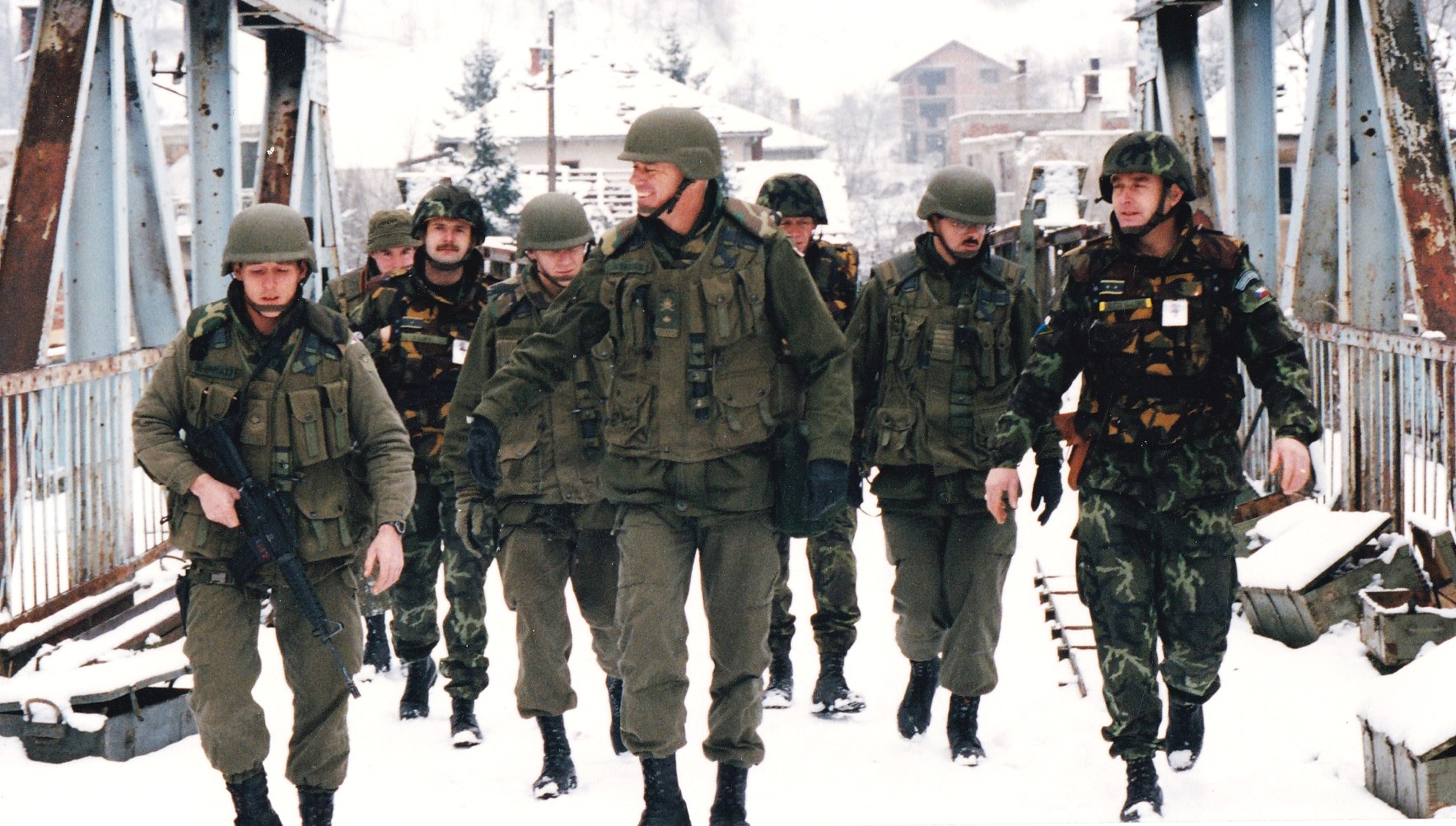
The inclusion in 2 CAMNB of a Czech battalion presented particular interoperability issues. In 1996, the Czech Republic was seeking to join the NATO Alliance, and participation in the IFOR mission was considered to be an opportunity for them to demonstrate appropriate military professionalism. While 6 Mech Battalion (Czech) was a capable, well-trained and suitably-equipped unit, it was still encumbered by the legacy of years of functioning under Soviet military doctrine. In the matter of ROE, this was problematic. The notion of “mission command” - being told “what” to accomplish but not “how” to accomplish it - was foreign to them. We spent considerable time with the Czech CO explaining this concept, while trying to avoid set-piece “trip wires” that he could use to “open fire” during hostilities. This tactful “re-programming” was made even more difficult because of language limitations. In the end I believe he got it, but it required a focussed effort. We were “lucky” that the Czech operations officer - Major Luky (pronounced “lucky”) - was a fluent English speaker.
The need for Brigade SOPS and strict conformance to them was hammered home forcefully in the first days of the operation when a vehicle belonging to a British patrol engaged in “exploring” their area of operations struck a mine. When the information reached brigade headquarters, I ordered an immediate halt to all movement and directed all commanding officers and their R Groups to proceed (with caution) to the site of the incident where I read the riot act and briefed them on a hastily developed SOP on movement control (including the creation and maintenance of a detailed map of routes that had been proven mine-free by combat engineers).
The bottom line: we inherited nothing and had to create everything. Moreover, we had to do it in the early days, weeks and months of the mission, when the principal Dayton tasks of separating the warring factions, supervising their return to barracks and taking control of heavy weapons were being performed. There was never a dull moment for the first 3-4 months!
Don’t Leave Home without Them
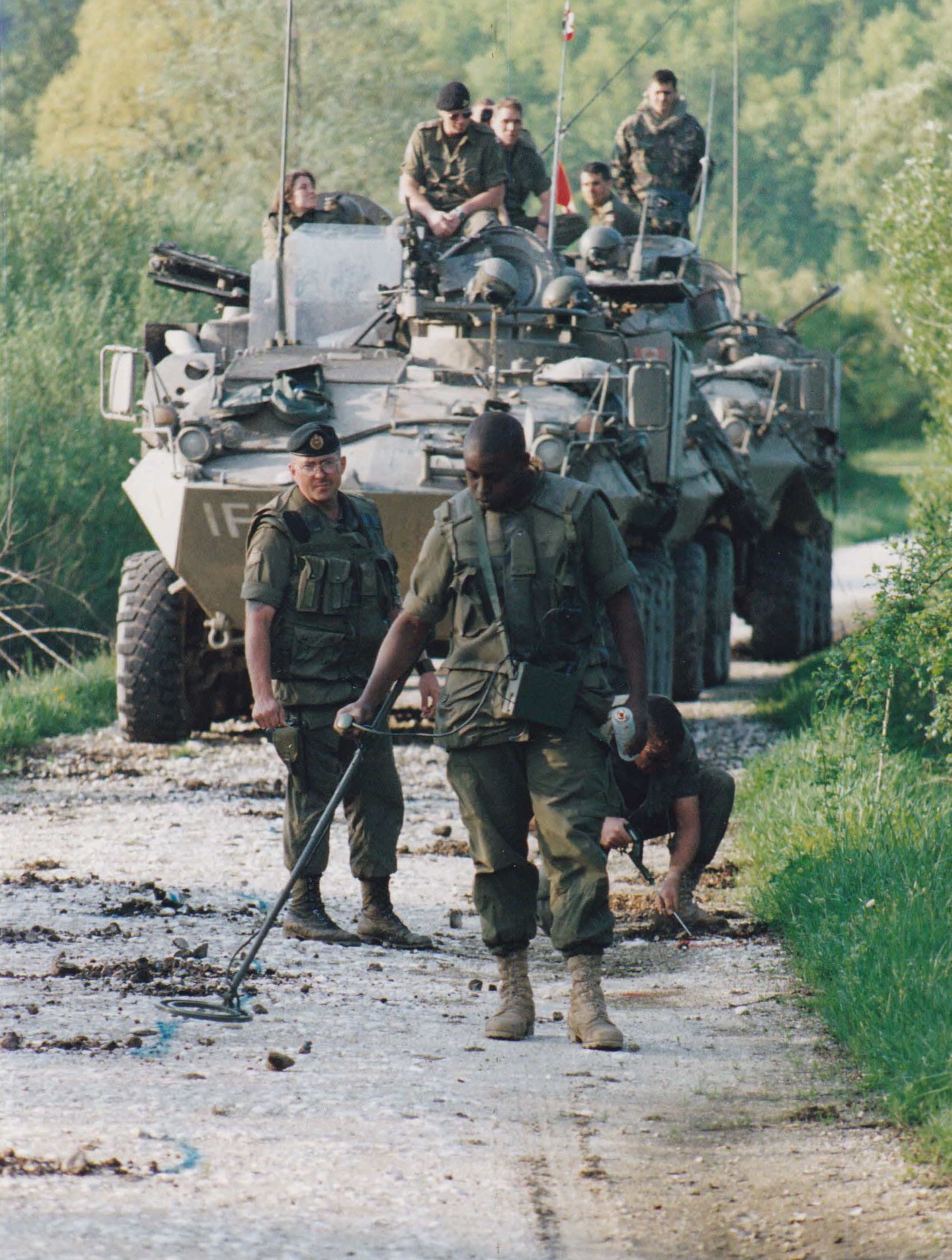
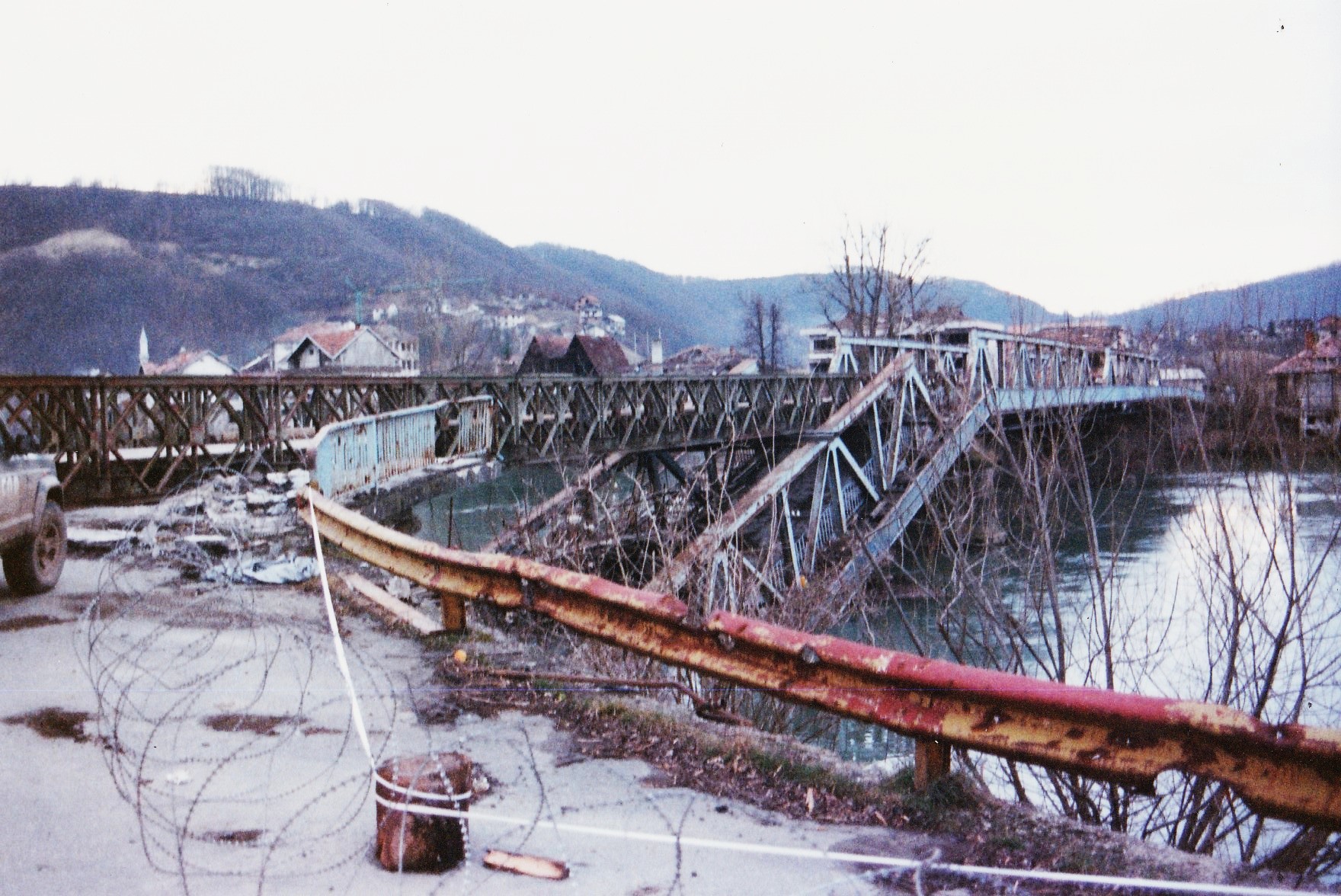
I don’t have sufficient time - nor is there a need - to properly sing the praises of Canadian military engineers. They are the Swiss army knives of the profession of arms - capable of fixing, building, protecting, destroying, maintaining mobility and making like infantry when push comes to shove. Bosnia was an engineer’s playground. We had a field squadron (22 Field Squadron) in the contingent, but more would have been desirable. Indeed, we began the operation with an engineer surge that brought additional troops and CO 2 CER and his RHQ to plan and control the entire engineer effort during the hectic weeks when the Canadian Contingent was getting established. After several weeks of Dayton implementation, it became clear to me that it was minefields and dangerous road conditions - not the warring factions - that posed the most risk to our troops. Clearing mines to enable us to go where we needed to go - not everywhere we might have liked to go - was the engineers’ most important contribution to both mission success and force protection.
Unsung Heroes
Our force structure included a relatively conventional complement of military police (CCIFORMP Platoon) under the command of the CO 2 MP Platoon. But we weren’t in theatre long before I realized that more were needed. Our MPs performed a multitude of tasks and acted with economy of force. As the CO noted later: “We were considered by brigade HQ to be non-confrontational, non-aggressive, trustworthy, and of course good observers.”
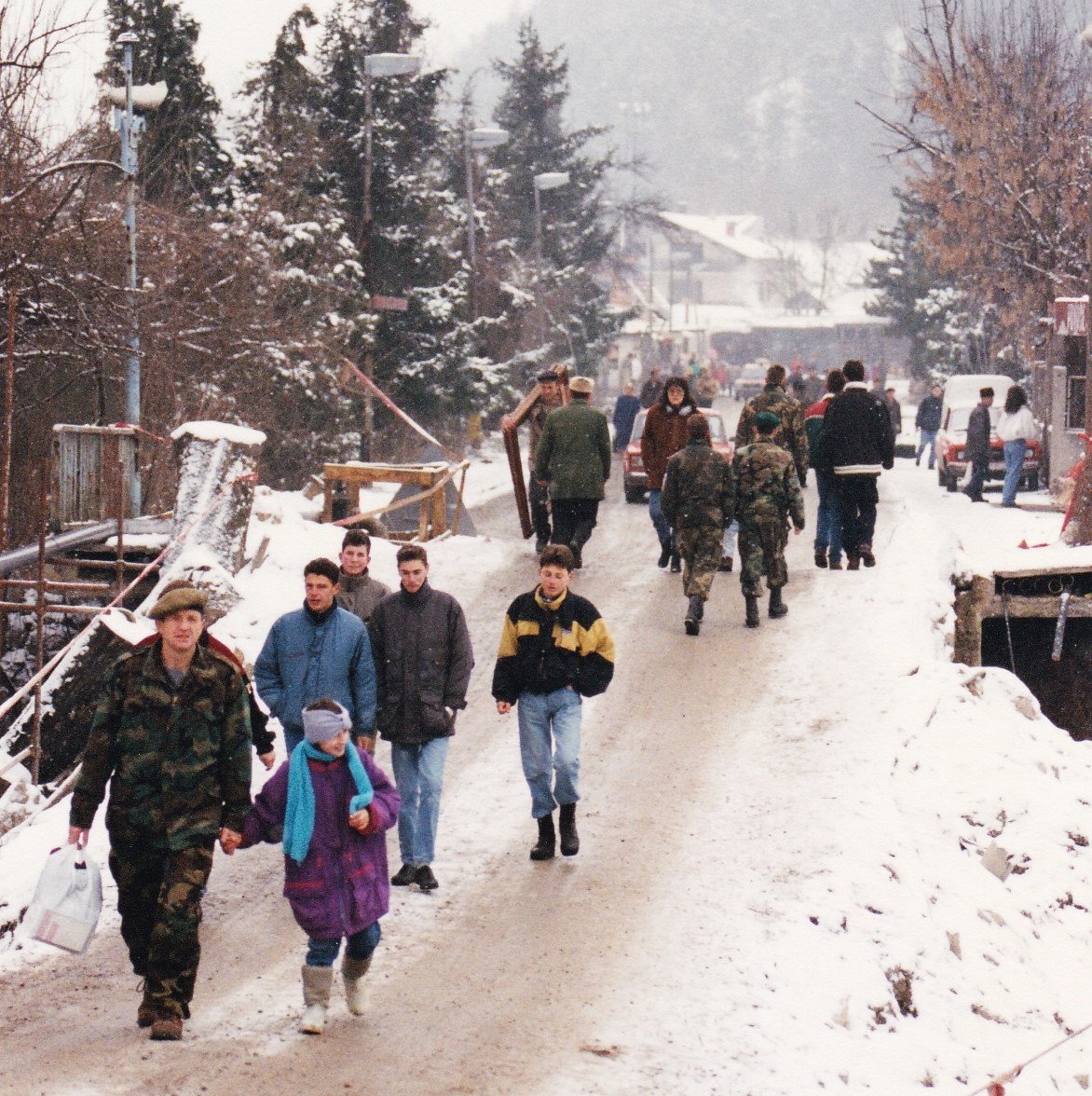
An unforeseen but critical MP requirement related to the nature of our mission. Before Dayton implementation began, the military forces of the warring parties were much in evidence controlling movement and interfering with the lives of the local population. But they ceased to be a factor after the early days on the “Dayton clock”, as military forces were required to return to barracks and stay there. In their place, local police sprouted like dandelions in springtime in every village and at every major intersection, waving their traffic control wands to exercise seemingly unlimited authority (whether it was related to actual local ordinances, extortion, harassment or alcohol abuse was difficult to assess). Frequent encounters with these “traffic stops” taught us that fighting fire with fire was the best way to neutralize the problem. Accordingly, we formally tasked our MP detachment with establishing liaison and building relationships with the local police forces. Gradually police encounter with both IFOR elements and local residents became less confrontational. I came to view our MPs as force multipliers. Such was their utility that I requested and received from NDHQ an increase to our MP establishment of two additional MP sections.
The larger complement of MPs also came in useful later in our deployment when I took action to reduce the incidence of speeding within the Canadian Contingent. As our area of operations was very large, our troops were inclined to reduce times in transit by travelling at speeds that were not necessary, if sound movement planning was exercised. I saw speeding as - next to mines - the greatest threat to life and limb in our operation, and eventually imposed lower-than-posted speed limits for IFOR vehicles and deployed MP radar traps for enforcement. I also emphasized this issue at every commander’s conference and during daily visits around the AO.
Taking Care of Family
By happen stance, OP ALLIANCE provided me the somewhat unique privilege of having my Allied Regiment under command - as my regiment, the 8th Hussars, and the Queen’s Royal Hussars are allied. However, although the QRH brought fine traditions, first class soldiers and current generation fighting machines to the party, they were ill-prepared to face a winter in Bosnia. We learned this when the Canadian exchange officer with the regiment showed up at the gates of brigade HQ to request (and receive) a Canadian sleeping bag and warm clothing. We also learned that something as basic as a heater was a rare commodity in the QRH lines (the appropriately-equipped Canadian Signals Detachment at Battle Group HQ was apparently a popular place to hang out).
Where No Business is a Happy Outcome
Lessons learned in the early rotations of UNPROFOR underlined the importance - for both practical and morale reasons - of deploying with a medical unit that included a comprehensive surgical capability. OP ALLIANCE was no exception. The advance party of the Advanced Surgical Center (ASC) of the contingent arrived in Camp Coralici on 3 January, where it quickly established MIR-level services for early-arriving elements of the brigade - just in time to permit Major Mehran, the resident surgeon, to save the life of a critically injured Bosnian Serb soldier through a late-night complex surgery under austere conditions. The balance of the ASC arrived on 15 February and the hospital was up and running by the 17th. When fully set up, the ASC included an operating theatre, a two-bed ICU, a two-bay resuscitation area, an X-ray department, a laboratory, a pharmacy and an eight-bed ward capable of expansion. The hospital complex area also became home to the Dental Detachment and the Forward Medical Equipment Depot. Not content with in-house responsibilities, the ASC liaised with the Bihac Hospital and by mid-March began to provide humanitarian aid to it. This included a much-needed and appreciated “stump clinic” for continued treatment of the many mine-related casualties that were a legacy of the war.
Keeping the Bayonets Sharp
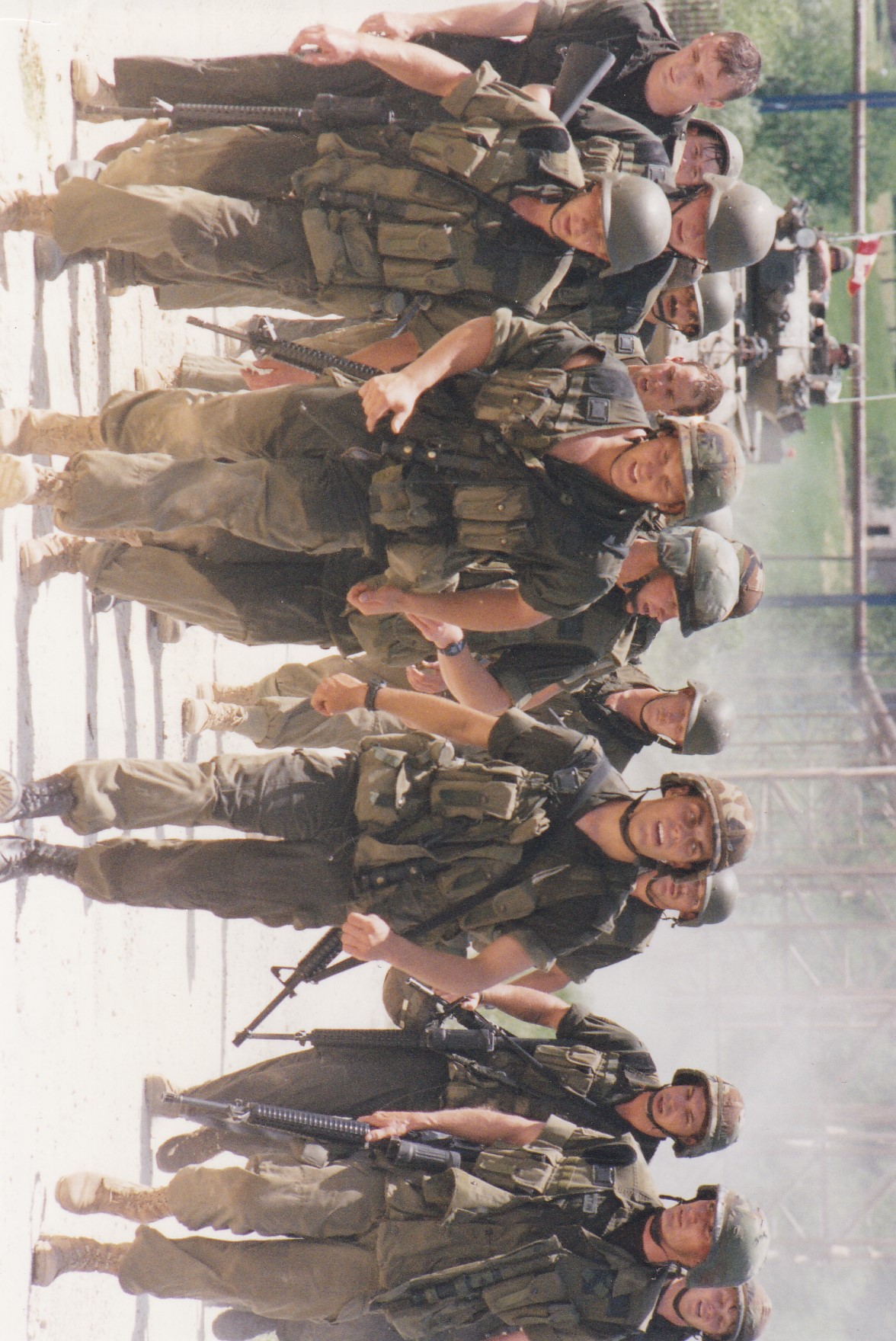
The emphasis placed on in-theatre training was a notable feature of the IFOR operation. The impetus behind this initiative was two-fold: to exercise and maintain the standard of the considerable capabilities NATO had assembled for this “peace enforcement” mission; and to provide a visible demonstration of those capabilities for its deterrent value. The training regime ranged from individual refresher training within units and sub-units to the live firing of all major weapons systems on an expedient range established at the Division level. The best illustration of this aspect of the IFOR mission was the initiative by G Company to establish in the Sanica Valley (a part of the Opstina that had been ethnically cleansed of Bosnian Serbs) a training complex comprising five field firing ranges. The Company Commander, Major Denis Thompson – now MGen (retd) - wrote: “I’ll never forget the look of respect when we put on a firepower demonstration for local Bosnian commanders. What really caught their attention was the speed and accuracy with which our Bison-mounted 81mm mortars could put down effective fire (a capability we surrendered, among many others, in the subsequent years). Most forces in Bosnia were light infantry, which is forever cognizant of the threat of mortars to their lives. Thus, the deterrent value of mortars to that lot was indisputable”.
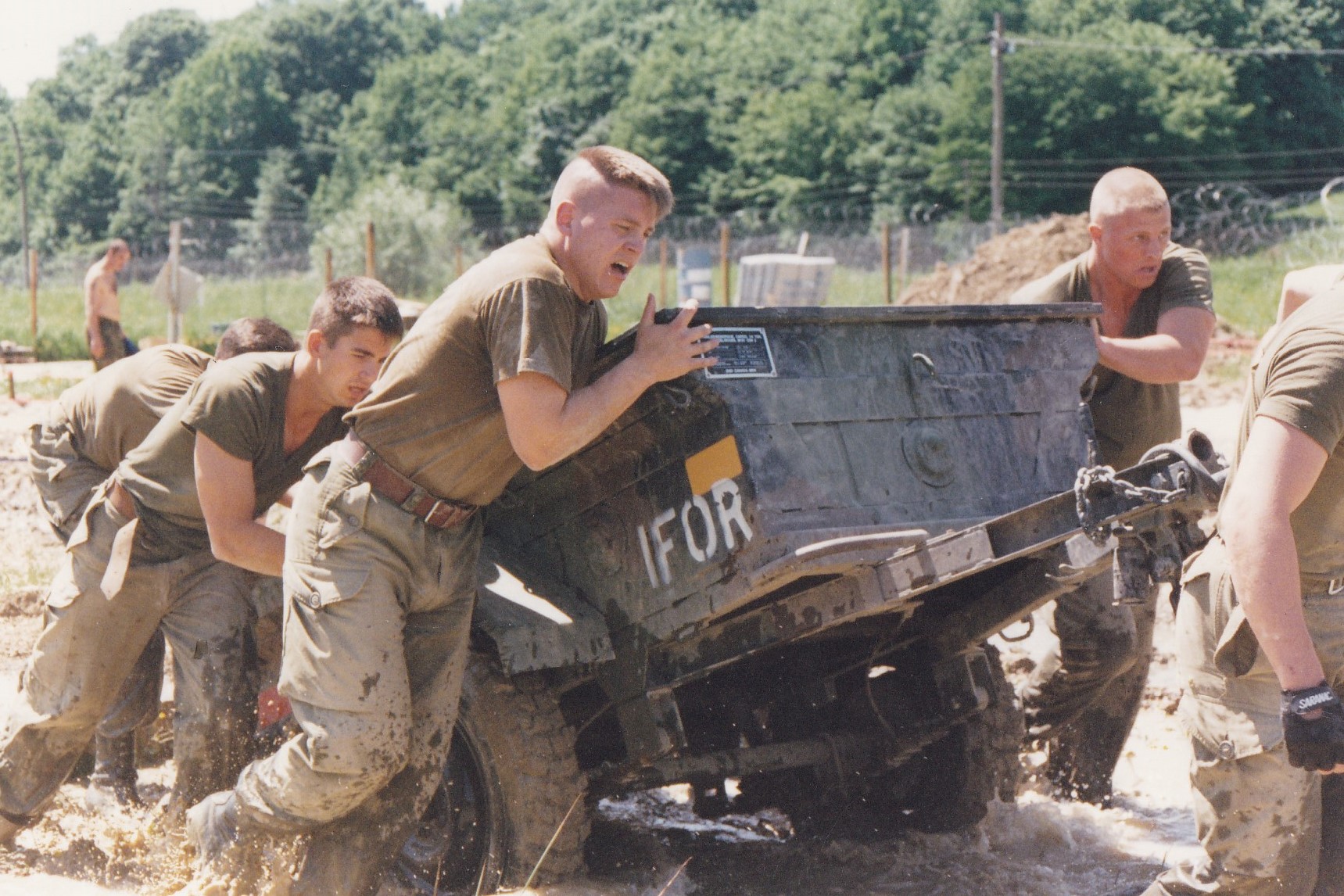
After considerable reflection, and despite lots of advice to the contrary, I introduced one more item to the training load. Drawing on the culture of 2 CMBG in Petawawa, I gave orders for a 2 CAMNB Military Skills Competition to be organized. This event was scheduled for the latter part of our six-month deployment, when the core tasks of the Dayton mandate were well in hand. But my reasoning went beyond “idle hands make mischief”. I saw this competition as an occasion that would enable Canadians, Czechs and Brits to mingle in a way that would not have happened in the regular routine and rhythm of life in theatre. Moreover, competition is an essential component of soldiering and a contributor to team esprit and morale. As designed, the event included all of the usual suspects: March and Shoot Competition; Obstacle Course; Tug of War; Chain of Command Race; etc. And it was complemented by an equipment display: a “show and tell” opportunity that permitted troops to check out the hardware of their allies. Happily, from a partisan perspective, when the dust settled at the end of the day, Team Canada emerged as the “Big Dog”, though competition was tight (except in the March and Shoot, where the RCR punished their opponents). The Canadian victory was particularly timely, as only weeks before the Czech Republic had beaten Canada in the final of the 1996 World Hockey Championships - and we were getting tired of hearing about it. Bragging rights can be good for morale!
Canada Dry
So, what about my “no-alcohol” policy, you ask? Yes, it attracted some attention and controversy - but perhaps more from outside the brigade than inside it. No one should have been surprised. It was a policy I had in place for FTXs when I commanded the 8th Hussars. And it was a policy that applied to all out-of-garrison training in the SSF (and later in 2 CMBG) when I commanded the formation (hence we became known as the Gatorade Brigade). My take on alcohol was informed in general by my observations on the tragedies it had caused in recent operational deployments from Petawawa. My conclusion? Alcohol consumption has no offsetting merits to counter-balance its negative effects. It is a depressant, the cause of poor or lost sleep and a contributor to many major diseases. In an operational environment, it is a distraction from the mission and often detrimental to discipline. In practice in Bosnia, the policy worked well. Soldiers were healthier than in typical two-beer-per-day missions, according to our doctors and sick parade data (indeed, our doctors opined that someone who consumes two beer per day is by definition an alcoholic). We had virtually no disciplinary incidents. Mission focus was enhanced, as instead of disappearing to the mess to drink beer after supper, soldiers could be found engaged in refresher training, battle procedure for the next day, fitness and sports, etc. NCOs felt that they were better able to exercise their responsibility for the welfare of their troops. NOK at home slept better knowing that their loved ones were safer. And pay that was often frittered away in canteens and bars was being saved and sent home. I happily stand by my policy. Responsibility and accountability for the success of the mission and risk management for all personnel were mine alone. Morale was high. We were doing good and important work, and we knew what was at stake for the CF. Enough said.
Our Fallen
One of the sad consequences of the heightened operational tempo and more complex and dangerous missions that the CF faced in the 1990s was an increase in casualties. We learned (or re-learned) a lot of painful lessons about how to deal with this reality of soldiering – one that had been absent to a large extent in the peaceful years of the Cold War. Responsibilities for dealing with NOK. Acknowledging and doing the right thing by those suffering from PTSD. Building up the capacity of family support centres. Walking the talk in how we financed and prioritized related policies. We struggled in all of these areas. In my first year in Petawawa, we were in the business of force generation in a big way – for the Balkans, Somalia and Rwanda. I inspected and addressed units before deployment and saw them off at the airport in Trenton. I hoped and prayed that they would all come home, but too often they did not. Much worse was to come in Afghanistan, but this did not make our relatively small losses any less painful.
When it came my turn to deploy - with more than 1,000 soldiers under command - it was my goal to bring them all home in six months’ time. Mission would come first, but safety and force protection would be top of mind as well - and I emphasized this constantly to brigade staff, to unit commanders and to troops directly. As the end of the mission approached without the Contingent having suffered any casualties, it appeared we might get out unscathed. I re-emphasized safety and the dangers of complacency. But ultimately, with the advance party of Roto 2 already in theatre, we were undone by a tragic road accident. A Bison carrying the quick reaction section of sappers to the site of a mine-strike that had disabled a British vehicle rolled while avoiding an oncoming vehicle in a tight corner on a steep descent. One soldier - Sapper Holopina - was killed instantly. Two were seriously injured. I was devastated - as, I believe, was every soldier in the formation, Canadian, Czech or British.
We came home proud but deflated. You can’t keep them all safe. You can only try. MGen (retd) Jim Ferron - my Chief of Staff in Bosnia (who controlled the incident response from brigade headquarters) - and I revisited this unhappy day when we got together at the Chateau Laurier in Ottawa in November 2023 to pay our respects to Gloria Hooper, Sapper Holopina’s mother, who was Canada’s Silver Cross Mother that year. The loss of Sapper Holopina is my defining memory from OP ALLIANCE. Losses- whatever the number – leave forever scars. So in the years that followed, I was keenly aware of the effects that were being felt by commanders, comrades and families alike during the Afghanistan War, Canada’s longest conflict, as many more casualties were taken. And the fatalities experienced by Ukraine (estimated to be more than 100,000) in its war with Russia in the defence of its sovereignty - which equal or exceed Canada’s total losses in the two World Wars - are truly hard to fathom. Surely no one hates wars more than those who fight them.
CCIFOR and the Media – No News is Good News
The CCIFOR Public Affairs Officer summarized the relative lack of media buzz around OP ALLIANCE this way: “Some people may have been surprised that we didn’t get front page media attention over the course of the tour. Well, we were victims of our own success. To a large extent, things went too well and peace broke out all over the place, thus making CCIFOR a less interesting story. There would have been much more media attention if things had not gone well: if we had used deadly force, for example; if some of us had been taken hostage; if we had taken serious casualties; if a scandal had occurred; etc. And while we were in Bosnia, detail after detail of the Somalia Enquiry emerged back home. How could we compete?”
Mission accomplished!

Have feedback or a story to share?


.jpg)